






Welded Ductile Iron Bar Grating Deck
Custom sizes and colors are available. FOB price US $1.9-10 per piece, minimum order 10 pieces.
Welded Ductile Iron Bar Grating Deck
Welded mesh over terminal quay decks
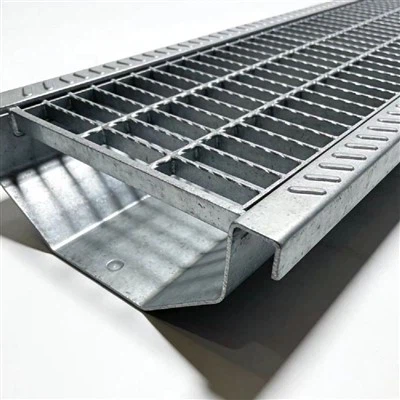
This welded bar grating covers drainage slots and service trenches along container terminal decks and quay floors, where forklifts, trailer dollies and crew on foot cross paved aprons that see rain, sea spray and occasional cargo spillage between vessel berths. The welded mesh joins bearing bars to cross bars at each intersection, so the panel stays flat under repeated wheel passage and the bars do not shift sideways under trailer tire scrub. Standing water on the apron drains through the open mesh into the trench below, which keeps the walking and driving surface from holding a wet film in the spray zone. Terminal routes run along berth edges, between stacking rows and across service aprons, and the grating line follows the low edge of the paving rather than crossing the main cargo band. Quay floors slope toward the slot, and the panel keeps loose grit, lashing debris and small cargo fragments out of the channel while runoff passes through. Where the apron crosses a stacking row or a service platform, the bar grating section there is seated on level ledges and checked for rocking after heavy spray.
Welded intersections hold the mesh flat under wheel passage. Runoff drains through to the trench.
Thickness band from 25 to 50 mm
On this bar grating the listed specification reads 1.22x3.66 m, thickness 25-50 mm, a band that covers light apron walkways up to heavier deck sections that take slow-moving yard traffic. Thickness here is the depth of the bearing bar, and a deeper bar spans a wider trench opening with less deflection under a load, while the lighter end of the band suits pedestrian and hand-cart duty along the berth edge. The body material is ductile iron, and the welded construction pulls the bar sections into one rigid panel that rests on the trench ledges at each side. Where the apron carries reach stacker or trailer wheel loads, the deeper bar section is matched to the measured trench width, and the support ledge under each edge bar is checked level before seating. Thickness choices are read from the terminal deck drawing, not guessed from the panel width alone.
Bar depth runs 25 to 50 mm across the band. Deeper bars span wider openings under wheel loads.

Drainage and anti-slip duty on wet cargo aprons
The listed usage on this panel covers drainage and anti-slip service, two jobs that quay decks combine in one surface. Drainage means the open mesh passes standing water from rain and spray through to the channel below instead of letting it pool on a smooth plate, and anti-slip means the bar tops and welded cross pattern give tire and boot grip on the wet apron so crews do not skid when stepping off a trailer or hooking a lashing. Salt air and periodic spray around harbor water age ordinary steel decking through rust pitting, and the galvanized finish on the ductile iron body slows that cycle without forming oxide wash that stains adjacent concrete or equipment paint. The certification record on the listing reads ISO, and that record travels with the batch paperwork for terminal tender review. Where spillage from cargo holds reaches the slot, routine washdown passes rinse silt off the mesh and panels lift for channel inspection when flow slows.
Mesh drains pooled spray; bar tops grip wet boots and tires. The listed certification record reads ISO.
| Bar | Marking |
|---|---|
| Listed dimensions | 1.22x3.66 m, thickness 25-50 mm |
| Body material | Ductile Iron |
| Product category | Grating |
| Listed form | - |
| Certification record | ISO |
| Intended service | Drainage, Anti-Slip |
| Load class band | - |
| Model reference | - |
| Edge and joint form | - |
Panel layout along truck and trailer routes
Terminal aprons mix truck lanes, foot routes and service crossings, and the bar grating panels are laid along the drainage edge of each route rather than across the main driving band. Bearing bars run parallel to the channel length so loads transfer toward the side ledges, and panel ends butt against one another along the slot with seams kept narrow enough to catch no trailer wheel. Where a trench crosses a trailer path, the panel section under the wheel is selected from the deeper end of the thickness band to take the repeated axle load without permanent sag. Edge bars rest on the prepared ledge, and flush seating keeps the apron surface uninterrupted so a driver does not feel a rim lip through the tires. Routine terminal rounds check panel seating after heavy wind or a washdown, since a lifted edge bar is the first sign a support ledge has shifted.
Panels follow the slot edge, not the truck lane. Wheel-crossing sections take the deeper bar.
Terminal deck order basis
The listed bracket runs US $1.9-10 per piece, ten pieces being the order floor; delivery timing follows the quotation, and panels carry the YH mark made in China. Type field, model reference, joint form and pressure class carry no assigned value on the source sheet, so those entries are settled against the terminal deck drawing at order stage. Custom panel sizes and finishes are accepted where the quay apron geometry falls outside the standard family. Before packing, the shop checks dimensions, weld intersections and bar seating across each section, and edge protectors keep the galvanized rim finish intact through loading to the berth.
Ten pieces starts the batch. Open listing fields are matched to the terminal deck drawing.
Hot Tags: Welded Ductile Iron Bar Grating Deck, China Welded Ductile Iron Bar Grating Deck manufacturers, Anti Clog Drain Grate, cast iron storm grate, corrosion resistant drain grate, curb inlet grate, Resin drain grate, storm drain grate
You Might Also Like


Send Inquiry