


Pipe Fittings
Industrial Pipe Fittings Manufacturer & OEM Supplier
We supply carbon steel, stainless steel, alloy steel, and forged pipe fittings for industrial piping systems, process plants, water treatment facilities, and mechanical equipment. Product options include butt-weld elbows, tees, reducers, caps, forged threaded fittings, and socket-weld fittings in a range of sizes, material grades, wall thicknesses, and end connections.
For project procurement and distribution orders, specifications can be reviewed against the applicable ASME, ASTM, MSS, or EN requirements. Material documentation, inspection reports, testing, and custom manufacturing options should be confirmed according to the selected product, purchase specification, and order requirements.


Product Range
|
Product Type |
Available Configurations |
Key Selection Parameters |
Applicable Standards to Confirm |
|
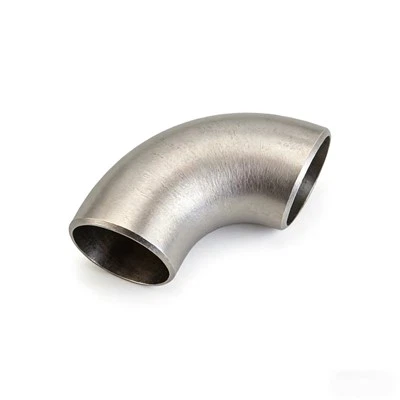
Butt-Weld Elbows |
45°, 90°, 180°, short-radius (SR) and long-radius (LR) |
NPS/DN, schedule, material grade, radius, end preparation |
ASME B16.9; applicable material specifications |
|
Equal and Reducing Tees |
Equal tees and reducing tees |
Run and branch sizes, wall thickness, material grade |
ASME B16.9 or applicable project standard |
|
Concentric and Eccentric Reducers |
Concentric and eccentric designs |
Large and small end sizes, length, wall thickness, orientation |
ASME B16.9 or applicable project standard |
|
Pipe Caps |
Butt-weld end caps |
Pipe size, schedule, material, forming and heat treatment requirements |
ASME B16.9 or applicable project standard |
|
Forged Threaded Fittings |
Elbows, tees, couplings, unions and other configurations |
Size, pressure class, thread type and material |
ASME B16.11 and applicable material specifications |
|
Forged Socket-Weld Fittings |
Socket-weld elbows, tees, couplings and related fittings |
Size, pressure class, socket dimensions and material |
ASME B16.11 and applicable material specifications |
|
Malleable Iron Fittings |
Elbows, tees, unions, couplings and adapters |
Nominal size, fitting configuration, thread standard and pressure requirements |
Applicable standards, such as ASME B16.3, where specified |
Materials and Technical Specifications
|
Material Group |
Example Grades |
Key Procurement Considerations |
|
Carbon Steel |
ASTM A234 WPB, WPC |
Material specification, wall thickness, forming and heat treatment requirements |
|
Low-Temperature Carbon Steel |
ASTM A420 WPL6, WPL3 |
Minimum design temperature, required impact properties and test temperature |
|
Stainless Steel |
ASTM A403 WP304/304L, WP316/316L, WP321, WP347 |
Corrosion conditions, grade, heat treatment and applicable supplementary tests |
|
Duplex and Super Duplex Stainless Steel |
UNS S31803 (2205), UNS S32750 (2507) |
Grade verification, corrosion requirements, heat treatment and project-specific testing |
|
Alloy Steel |
ASTM A234 WP5, WP9, WP11, WP22, WP91 |
Service temperature, material grade, heat treatment and applicable inspection requirements |
|
Forged Carbon Steel |
ASTM A105, where applicable to the fitting product specification |
Forging grade, fitting standard, pressure class and material documentation |
Dimensions: Confirm center-to-end dimensions, outside diameter, fitting angle, branch dimensions, and other requirements against the applicable product standard and approved drawing.
Wall thickness: Specify the required schedule or nominal wall thickness. Acceptance criteria for minimum wall thickness must follow the applicable standard and purchase specification.
Bevel preparation: Butt-weld ends may be prepared to ASME B16.25 where specified. Bevel angle, root face, and end preparation must be confirmed for the actual wall thickness and welding requirements.
Roundness and alignment: Dimensional tolerances should be stated according to the applicable fitting standard and inspection requirements.
Custom dimensions: Non-standard diameters, heavy-wall configurations, and special end preparations require engineering review before acceptance.


The manufacturing route depends on the fitting type, material, size, and production method. A typical route for formed or forged fittings may include:
Raw Material Verification → Forming or Forging → Heat Treatment, Where Required → Machining and Bevel Preparation → Dimensional Inspection → Specified NDT and Mechanical Testing → Marking and Final Inspection → Packaging and Documentation.
Inspection and Testing Options
Positive Material Identification (PMI): Handheld XRF analyzers verify alloy content before and after machining.
Non-Destructive Testing (NDT): Radiographic Testing (RT) on welded seams, Ultrasonic Testing (UT) on raw pipe stock, and Magnetic Particle Inspection (MT) on forged surfaces.
Mechanical & Metallurgical Testing: Tensile strength, yield point, elongation, Charpy V-notch impact testing at low temperatures (-46°C), and hardness testing.
Dimensional Inspection: Coordinate measuring machines (CMM) and digital calipers verify wall thickness, center-to-end dimensions, and bevel angles.
Traceability: Heat numbers are hard-stamped on each fitting and linked directly to EN 10204 3.1 Mill Test Reports (MTR).
Customization and Supply Options
Custom Wall Thicknesses & Non-Standard Diameters
Heavy-wall fittings up to 80mm wall thickness and custom reductions.
Surface Treatments
Hot-dip galvanizing (ASTM A153), black phosphate coating, anti-corrosion varnish, epoxy lining, and pickling/passivation for stainless steel.
End Connections
Threaded (NPT, BSPT, BSPP), Socket-Weld, Flanged transition ends, and custom weld prep angles.
Packaging & Logistics
ISPM 15 compliant wooden cases, steel-framed crates with end cap protectors, color-coded hard-stamping, and custom barcode labeling for inventory management.
Our Factory


FAQ

Request a Technical Quotation
Send your piping specifications or bill of materials for review. Our team can assess the requested product range and confirm applicable manufacturing options, technical requirements, documentation, pricing, and lead time.
Contact: anzhiyuan@yhmadeinprc.com.cn — please verify the correct sales email address before publication.
Information required for quotation:
Product type and applicable standard.
NPS/DN, schedule or wall thickness.
Material grade and service conditions.
Quantity and delivery destination.
Required testing, inspection, and certification documents.
Surface treatment, marking, and packaging requirements.
Drawings or project specifications for non-standard fittings.