






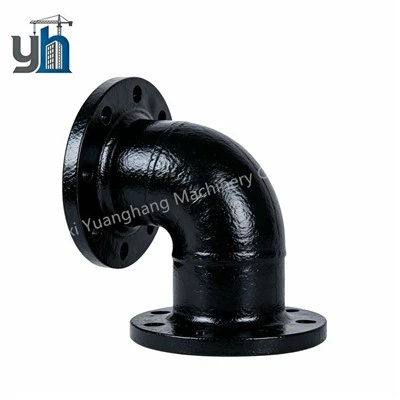
90 Degree Carbon Steel Elbow
Sizes are made to order. FOB price US $2-150 per piece, minimum order 10 pieces.
90 Degree Carbon Steel Elbow
Bending a welded main around a crossing
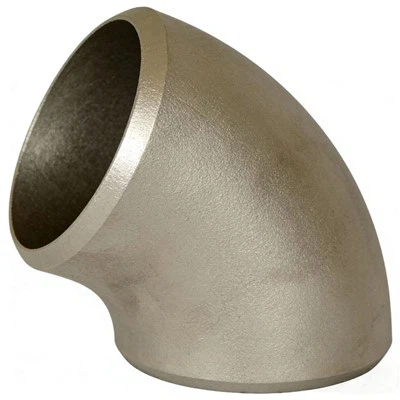
This elbow redirects a welded steel gas main through ninety degrees where the route has to turn around a road crossing, a meter station, a property boundary or another utility corridor. Gas transmission and distribution contractors order the bend for field-welded pipeline work, where sections are strung along the trench and joined on site rather than pre-fabricated into spools in a shop. The carbon steel body is made for field welding, and each piece is matched to the OD and wall of the main it joins, so the welder can tie the bend straight into the run. The ninety-degree turn moves the main from one alignment to another without a series of shallow offsets stacked along the route. At a road crossing the bend lifts or drops the main under the obstruction, and at a meter station it turns the run toward the inlet and outlet connections of the skid. Distribution branches use the same bend where a local main turns along a street corner or into a pressure regulating chamber.
One bend equals one right-angle turn. Offset corners use several shallow pieces instead.

Field weld end matched to OD
The end preparation follows the field weld practice of the pipeline, with the bevel and OD matched to the mating pipe so the joint gap and fit-up allowance stay within the weld procedure. The body carbon steel takes the same welding treatment as the main line itself, which keeps the material response consistent when the field welder runs the root, fill and cap passes. Before the bend is laid in the trench, the end is checked against the pipe OD recorded on the order; a mismatch at the weld end means the joint cannot be fit up square, and the piece goes back to the stock rather than being forced into the line. The field weld end is beveled back to a clean band, and any surface rust or coating on that band is removed before the root pass. Where the main sits in a deep trench, the bend is lowered on supports so the joint can be reached without pulling the piece out of alignment.
Field welds follow the line procedure. The bend does not come with its own special pass sequence.
Custom dimensions for a meter station
Dimensions are produced to customized sizes against the pipeline contractor's inputs, rather than pulled from a fixed catalog range. When the contractor provides the OD and wall of the line, the bend is cut and prepared to those values so the bend sits on the same geometry as the station or trench drawing. Meter station tie-ins, road crossing turns and distribution header corners each carry their own size and wall, and the order list records these separately so the batch is scheduled without mixing sections. The FOB bracket runs US $2-150 per piece, reflecting the span of small distribution bends and larger transmission sections covered by the listing. At a meter station, the bend aligns the main with the skid nozzles, and the recorded OD on the bend end matches the station inlet and outlet pipe.
Wall follows the main, not the elbow alone. A thin bend on a thick main welds unevenly.
What the pipeline crew checks on arrival
On delivery to the laydown yard, the crew checks OD, wall, end condition and surface mark against the order sheet before the bend is issued to the trench. Keep the end protectors on until the weld joint is about to be closed, and the bevel is kept free of mud, rust and mill scale before welding. On the source sheet the rating, certificate, bore and usage entries are blank; for gas transmission work, the applicable line rating, material certificate and survey requirements should be confirmed against the project specification before material release. Brand mark YH, origin China. Each piece in the batch is stacked by size in the laydown yard, with protectors intact, so the crew can pull the matching bend when that section of trench is ready for welding.
Check before the dig. A wrong-size bend discovered in the trench holds the whole crew.
Tying the bend into the gas run
In the field, the elbow is set between two straight sections, aligned to the route centerline, and tacked before the final weld passes are run. Fit-up crews square the joint, check the gap around the circumference and confirm the turn matches the station or crossing drawing; after welding, the joint enters the same inspection sequence as the rest of the main. The minimum order is 10 pieces, and lead time is agreed with the buyer at order confirmation since the listing leaves it open. Once the section passes inspection, the bend location is recorded on the as-built pipeline map, so later repairs can identify which turn sits at each crossing or station.
Tack first, weld second. A bend pulled into place by force shifts the centerline out of alignment.
| Row | Fact |
|---|---|
| Fitting class | - |
| Body material | Carbon Steel |
| Listed model | - |
| Bore specification | - |
| Joint form | - |
| Pressure class | - |
| Certification record | - |
| Intended service | - |
| Brand mark | YH |
| Country of origin | China |
| Delivery window | - |
| FOB price bracket | US $2-150 / Piece |
| Minimum order | Min. Order: 10 Pieces |
| Product type | Elbow |
Hot Tags: 90 Degree Carbon Steel Elbow, China 90 Degree Carbon Steel Elbow manufacturers, carbon steel industrial joint fittings, carbon steel industrial piping components, carbon steel pipe fitting, carbon steel pipe joint fittings, carbon steel plug fittings, carbon steel process fittings
You Might Also Like




Send Inquiry