



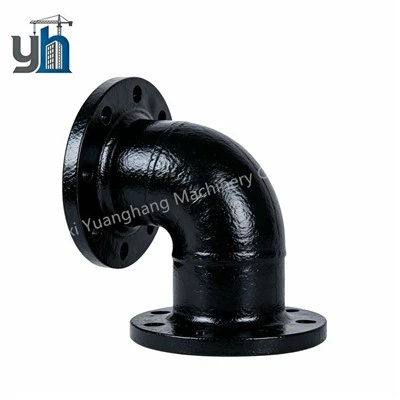
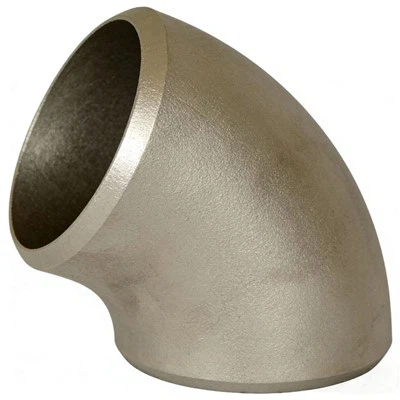
Carbon Steel 90 Degree Elbow DN15
Custom sizes are available. FOB price US $2-150 per piece, minimum order 10 pieces.
Carbon Steel 90 Degree Elbow DN15
Deck-side cooling and ballast runs
These elbows go to shipyards and offshore fabricators for the utility, cooling and ballast lines that run along ship decks and inside pipe racks. On a vessel, water and service lines follow the deck contour, cross between compartments and drop down to pumps, tanks and heat exchangers, and each change in direction takes a ninety-degree bend like this one. The carbon steel body is welded into deck-side racks once the section is positioned, which is where most of these pieces end up after delivery. Cooling water loops, ballast piping and auxiliary utility runs share the same size band, with the end form selected to match how each section joins its neighbors. Along an open deck rack, the elbow turns the line around a pipe support or a ventilation trunk; inside a compartment, it redirects the run toward a tank nozzle, a pump connection or a heat exchanger inlet as the layout requires. Offshore fabrication yards use the same fittings on platform skids and module racks before the units are lifted to the field.
Deck racks carry several services. Each line keeps its own labeled run from pump to tank.

Three end options for a shipyard crew
Three end forms appear in the listing: butt weld, socket weld and threaded. Butt weld ends bevel to matching pipe for a rigid permanent joint on larger cooling and ballast mains; socket weld ends slide the pipe into a recessed bore before fillet welding, common on compact smaller connections; threaded ends screw onto standard pipe for lines where crews need to break the joint without cutting. When a shipyard piping crew sends the section join method, the matching end is shipped, so no on-site conversion from one end form to another is needed. The bore range DN15 to DN100 covers the smaller deck services rather than the largest vessel main. Socket weld joints are typical on instrument and auxiliary lines, butt weld on the cooling and ballast mains, and threaded ends on removable connections that may be opened during vessel maintenance.
Socket weld hides the pipe end inside the bore. Butt weld shows the full bevel at the joint.
Bore range inside the rack
Sizes run DN15 to DN100, the band of deck utility, cooling and ballast branches that fill shipyard racks and platform skid frames. Smaller elbows serve instrument and auxiliary connections, while the upper end of the range takes cooling and ballast lines that branch off larger vessel mains in the deck-side pipe rack. Customization is available against a stated OD and wall, and the piece is cut to those inputs before it leaves the shop. The rating and certificate entries on the source sheet are blank, so any class or survey record required by the shipyard specification should be requested at order stage. The DN15 end of the band runs on the smallest auxiliary and sample connections, while a DN100 bend sits on a branch off the main cooling or ballast header.
DN15 stays in the small end group. A DN100 bend handles a noticeably heavier wall.
Beveling or tapping to the section
Before packing, each end is prepared to its listed form: beveled for butt weld, recessed for socket weld, or threaded for the screwed connection. The preparation matches the mating pipe size recorded on the order, and the end is checked for squareness and surface condition before the protector goes back on. On site, the shipyard crew fits the elbow to its spool position, aligns the centerline turn with the rack route, and makes the joint according to the join practice of that service line. Threaded ends get sealing compound or tape, welded ends get the deck weld procedure applied to the bevel or socket. The prepared end is protected in transit, and the thread or bevel is inspected again at the shipyard store before issue to the fitting crew, so no damaged end reaches the deck rack.
Threads stay protected until assembly. A nicked thread on the rack leaks once the line fills.
What reaches the shipyard store
The minimum order is 10 pieces, FOB bracket US $2-150 per piece, with the final figure tied to bore, end form and quantity. Brand mark YH, origin China, lead time open on the listing and agreed when the order is confirmed. The packed batch carries the order reference for receiving inspection in the shipyard store, where elbows are sorted by size and end form before being issued to the piping crew. Custom dimensions follow the same inspection sequence, with the order sheet attached to the crate. Spare bends for later vessel refit work are held in the store by bore and end form, so a replacement can be matched to an existing rack section without re-measuring the whole line.
Sort by end form in the store. A socket elbow mixed with butt weld stock slows the crew.
| Reference | Measure |
|---|---|
| Fitting class | Elbow |
| Body material | Carbon Steel |
| Listed model | - |
| Bore range | DN15-DN100 |
| Joint forms | Butt Weld, Socket Weld, Threaded |
| Pressure class | - |
| Certification record | - |
| Intended service | - |
| Brand mark | YH |
| Country of origin | China |
| Delivery window | - |
| FOB price bracket | US $2-150 / Piece |
| Minimum order | Min. Order: 10 Pieces |
| Product type | Elbow |
Hot Tags: Carbon Steel 90 Degree Elbow DN15, China Carbon Steel 90 Degree Elbow DN15 manufacturers, carbon steel adapter fittings, carbon steel industrial joint fittings, carbon steel industrial piping components, carbon steel pipe fitting, carbon steel plug fittings, carbon steel process fittings
You Might Also Like




Send Inquiry