



Outdoor Flanged Fire Hydrant DN100
Custom models are accepted, FOB pricing runs US $65-1,000 per piece, min. order 30 pieces. OEM welcome.
Outdoor Flanged Fire Hydrant DN100
Standing hydrants beside building fire routes
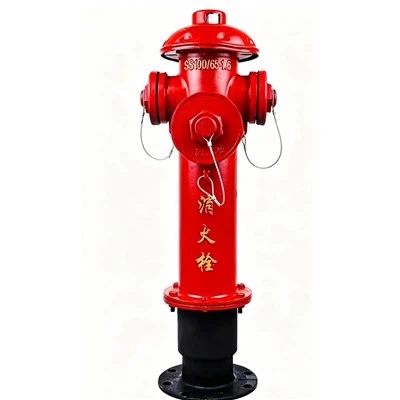
This outdoor fire hydrant stands beside building entrances, perimeter routes and street-side fire points, the above-ground class of pedestal that feeds brigade hose lays from the exterior main. Listed application on the source record is building fire protection, covering the exterior connections that serve a plot entrance, courtyard or outer wing rather than an indoor cabinet. The pedestal repeats along the plot perimeter at the spacing shown on the fire system layout, keeping any risk area within reach of a hose run from the nearest connection. Placement keeps the unit visible from the driveway and clear of parked vehicles, planters and facade overhangs.
The driveway crew knows where each pedestal stands. They keep the strip beside it empty all year.
DN100 to DN150 inlet schedule
Model references read SS100/65 and SS150/80, with the specification covering a DN100 to DN150 inlet range. The first code digit group marks the inlet bore, the second the outlet bore, so SS100/65 ties a DN100 main to DN65 outlets and SS150/80 ties a DN150 main to DN80 outlets. The chosen model matches the buried main serving that part of the plot, and outlet bore decides the hose diameter laid on arrival. Body material carries no assigned value on the listing; pressure class and certification record are likewise open, and those fields are confirmed against the building fire system specification at tender review.
The main size picks the model. The model code pairs inlet and outlet in one look.
Flanged body on the exterior main
The joint type is a flange connection at the hydrant base, bolted through a companion flange on the exterior main with gasket seated between the faces. Flanged mounting lets the pedestal be lifted and replaced without cutting the buried pipe, a practical advantage for outdoor units that age in weather and traffic proximity. Installation crews check plumb, center the gasket and even out bolt torque around the circle before backfill returns over the excavation. A main with a different bolt pattern needs an adapter flange, and that detail is settled on the drawing rather than worked out in the trench.

Street and entrance placement clearance
Building exterior hydrants sit in a strip between the walking line and the carriageway, close enough to the entrance to cover the facade but far enough back to stay clear of door swings and guest circulation. A clear radius around the base leaves room for two people to work the outlet heads at once, and the pedestal should not hide behind a planter, signage board or parked vehicle. Surface finish and corrosion practice follow the site maintenance standard; the listing assigns no coating or pressure class. Buyers note outlet direction on the layout, since heads facing a glass lobby or dining terrace do not suit the hose-lay side.
How exterior stands serve building routes
Building projects supply hydrants in phases by wing or block, and custom models are accepted when a facade or landscape layout calls for a non-standard arrangement. Before dispatch, confirm flange pattern and outlet coupling form against the hose stock held on site. A receiving check: bolt or thread the outlet to a sample hose end and confirm the seal face seats squarely before the pedestal goes into service.
What entrance routes keep clear around the stand
The exterior fire main runs along the building perimeter and branches to each standing hydrant, feeding the pedestal from below rather than from a nearby tank or a temporary rooftop connection. The DN100 to DN150 inlet range on the listing matches those branch sizes, and the SS100/65 and SS150/80 model codes pair each inlet bore with its corresponding outlet bore. On arrival the brigade couples to the head, lays the line along the route the site plan marks, and keeps the connection square to the seat so the gasket does not weep during the first minutes of the response. Pedestal spacing across the plot follows the fire layout intervals, covering entrance doors, courtyard wings and outer facade strips within one hose run from the nearest stand. Where the main turns along a side elevation or drops toward a service court, the hydrant positions on either side follow the network hydraulics rather than a straight even line along the fence.
The main branches to each stand. The model code pairs inlet and outlet at a glance.
Building crews inspect the exterior hydrants between occupancy periods: the base strip stays clear of planters and temporary signs, the outlet caps seal against courtyard dust, and the valve cycles freely after months of standing idle. Surface finish follows the site maintenance standard, and any touch-up goes on after the body is checked for chips from passing trolleys or service vehicles. The listing leaves body material and pressure class open, so those fields are confirmed against the building fire system specification in tender review. Spare bodies hold to the same model codes as the installed set, and maintenance replaces like for like when a pedestal shows a leaking seat or a stiff stem. Custom models are accepted when a facade or landscape layout calls for a non-standard arrangement.
The exterior fire main runs along the building perimeter and branches to each standing hydrant, feeding the pedestal from below rather than from a nearby tank or a temporary rooftop connection. The DN100 to DN150 inlet range matches those branch sizes, and the SS100/65 and SS150/80 codes pair each inlet bore with its corresponding outlet bore. On arrival the brigade couples to the head, lays the line along the route the site plan marks, and keeps the connection square to the seat so the gasket does not weep during the first minutes of the response. Pedestal spacing across the plot follows the fire layout intervals, covering entrance doors, courtyard wings and outer facade strips within one hose run from the nearest stand. Between occupancy periods the base strip stays clear of planters and temporary signs, the outlet caps seal against courtyard dust, and the valve cycles freely after months of standing idle. Where the main turns along a side elevation or drops toward a service court, hydrant positions follow the network hydraulics rather than a straight even line along the fence. A trial order can start with a small lot, and the price bracket and delivery window follow the quotation and the ordered quantity.
| Tag | Specimen |
|---|---|
| Listed unit class | Outdoor Fire Hydrant |
| Certification record | - |
| Bore and outlet schedule | DN100–DN150 |
| Working pressure band | - |
| Model reference | SS100/65, SS150/80 |
| Body composition | - |
| Listed application | Building Fire Protection |
| Product category | Fire Hydrant |
| End connection | Flange Connection |
Hot Tags: Outdoor Flanged Fire Hydrant DN100, China Outdoor Flanged Fire Hydrant DN100 manufacturers, fire hydrant distribution system, fire hydrant hose connection, fire hydrant outlet, Indoor Fire Hydrant, Outdoor Fire Hydrant, Underground Fire Hydrant
You Might Also Like



Send Inquiry