






Copper Alloy DN65 Indoor Hydrant
Custom models are accepted, FOB pricing runs US $5-70 per piece, min. order 30 pieces. OEM is welcome.
Copper Alloy DN65 Indoor Hydrant
Copper alloy indoor hydrants in public buildings
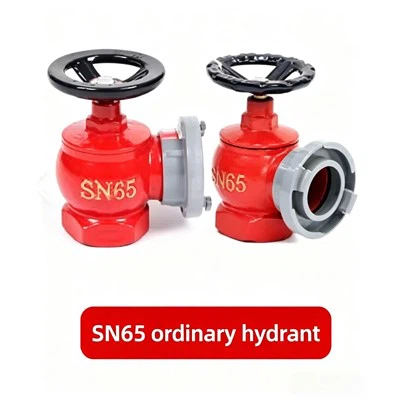
This indoor fire hydrant serves commercial buildings, hospital corridors and public interior fire risers, set in a wall cabinet alongside its hose roll and nozzle. Copper forms the body, an alloy favored in indoor standpipe work for its clean appearance and resistance to the damp, dust and paint overspray that settle inside a corridor cabinet. Listed application on the source record is indoor building fire protection, the interior class of hydrant tied to a vertical riser rather than an outdoor standing main. Cabinets repeat along corridors, stairwells and refuge floors at the layout intervals, each box holding its matched hose and nozzle so the pair stays together through a fast response.
Maintenance walks the corridor floor by floor. Each cabinet gets the same wipe and valve cycle.
Sn65, SNW65, SNZ65 and SNS65 model set
Four model references appear: Sn65, SNW65, SNZ65 and SNS65. The base Sn65 is the standard indoor body; the SNW65 carries a regulating function, the SNZ65 uses a rotary arrangement, and the SNS65 carries a double-outlet configuration. The cabinet schedule on the drawing names the variant for each floor, and maintenance replaces like for like so the hydraulic role of each riser branch stays unchanged. Model spelling on the record mixes capitalization across the four codes, but the variant functions remain the same family as the other indoor hydrant listings. Buyers confirm the variant callout against the riser drawing before supply.
Regulating, rotary or double outlet. The drawing callout names the body type.
DN65 bore with dual end options
The specification lists a DN65 bore, and the joint type lists flange connection and thread connection as dual end options. Flanged ends bolt to a companion flange on the riser take-off; threaded ends screw onto a matching male connection. Which end form each cabinet receives follows how the vertical main was built, and the project schedule usually states flange or thread per floor. Mixing the two without an adapter leaves the body unable to mate with the take-off, so the buyer confirms end form against the riser drawing before the order cuts. Pressure class and certification record carry no assigned values on the listing, and those fields follow the building fire system specification reviewed at tender.

Corridor and riser cabinet placement
Indoor hydrants occupy wall recesses off the walking line, with outlet heads facing out for hose lay toward the nearest risk area. In commercial and hospital layouts the cabinet stays clear of door swings, bed trolleys and corridor storage, so access crews can open the door and pull the roll without a blocked approach. Interior conditions keep the copper alloy away from road salt and heavy weather, though periodic damp and dust still collect on exposed faces, and maintenance wipes the seal and cycles the valve on each visit.
How corridor cabinets sit along public routes
Commercial fit-outs supply hydrants floor by floor, and custom models are accepted when a riser layout calls for an outlet arrangement outside the standard variant list. OEM part marking can be arranged when the distributor or building needs its own reference on the body. Before packing, the end connection gets a protector and the valve rests closed; at receiving, match the body to the cabinet drawing and confirm the end form mates with the riser take-off.
How copper alloy wears in corridor service
Copper alloy in an indoor cabinet sees a gentler environment than an outdoor pedestal: no road salt, no standing rain, no forklift traffic near the body, but still corridor dust, occasional damp and paint overspray during building redecoration. The alloy holds its thread form and seating face through repeated cabinet visits, and the smooth surface wipes clean without the corrosion scale that bare steel would develop in a damp recessed box. The body mounts on the riser take-off at DN65, with flange or thread end following how the vertical main was built, and each cabinet on the floor schedule receives the variant called out on the drawing. Maintenance replaces like for like, so a regulating, rotary or double-outlet body does not swap into a branch that needs a standard Sn65 role. Surface condition stays plain alloy as supplied; any grip wrap or marking follows the building equipment practice after install.
Indoor conditions are gentler. The cabinet still gets wiped and the valve cycled each visit.
Commercial and hospital corridors place cabinets at refuge points, stairwell returns and corridor ends, each box clear of door swings, bed trolleys and stored cleaning equipment so the approach route opens without an obstacle. The outlet heads face the hose-lay side toward the nearest risk area, and that direction is checked against the layout before the cabinet is fixed in the wall recess. The listing assigns no pressure class or certification record, and those fields follow the building fire system specification reviewed at tender. Spare bodies in the store follow the same four variant codes, held by DN65 and end type, and OEM part marking can be arranged when the distributor or hospital needs its own reference on the delivered body.
Copper alloy in an indoor cabinet sees a gentler environment than an outdoor pedestal: no road salt, no standing rain, no forklift traffic near the body, but still corridor dust, occasional damp and paint overspray during redecoration. The alloy holds its thread form and seating face through repeated cabinet visits, and the smooth surface wipes clean without the corrosion scale that bare steel would develop in a damp recessed box. The body mounts on the riser take-off at DN65, with flange or thread end following how the vertical main was built, and each cabinet on the floor schedule receives the variant called out on the drawing. Maintenance replaces like for like, so a regulating, rotary or double-outlet body does not swap into a branch that needs a standard Sn65 role. Corridor cabinets sit at refuge points, stairwell returns and corridor ends, each clear of door swings and trolleys so the approach route opens without an obstacle. Spare bodies follow the four variant codes, held by DN65 and end type, and OEM marking can be arranged when the distributor needs its own reference. A trial order can start with a small lot, and the price bracket and delivery window follow the quotation and the ordered quantity.
| Housing | Setup |
|---|---|
| Working pressure band | - |
| Listed unit class | Indoor Fire Hydrant |
| Body composition | Copper |
| Certification record | - |
| Bore and outlet schedule | DN65 |
| Product category | Fire Hydrant |
| End connection | Flange Connection, Thread Connection |
| Listed application | Indoor Building Fire Protection |
| Model reference | Sn65/Snw65/Snz65/Sns65 |
Hot Tags: Copper Alloy DN65 Indoor Hydrant, China Copper Alloy DN65 Indoor Hydrant manufacturers, above ground fire hydrant, Durable Cast Iron Indoor Fire Hydrant, fire hydrant coupling, fire hydrant metal valve body, Indoor Fire Hydrant, Outdoor Fire Hydrant
You Might Also Like


Send Inquiry