






Flanged Above Ground Fire Hydrant
Flanged Above Ground Fire Hydrant
Exterior hydrants around hotel courtyards
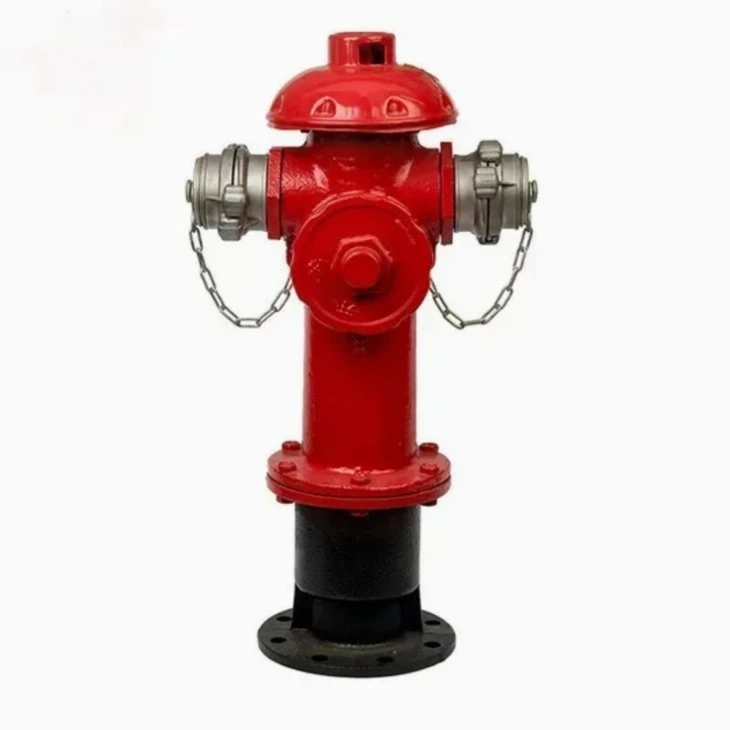
This above-ground outdoor hydrant serves hotel forecourts, commercial site perimeters and courtyard fire mains, where a standing unit gives the brigade a visible water connection outside the building envelope. Pedestrians and service vehicles pass the unit on the driveway, so placement keeps the outlet heads clear of guest approach paths, valet parking bays and landscaping beds while staying reachable from the carriageway. Listed application on the source record is hotel fire protection, the exterior class of hydrant tied to the building fire main rather than an indoor cabinet unit. The body repeats along the plot perimeter at the spacing shown on the fire system layout, covering entrances, service courts and outer wings within hose-lay distance.
The site manager walks the driveway before placement. A hydrant hidden behind a planter is no use on arrival.
SS100/65 and SS150/80 model lineup
Two model references appear: SS100/65 and SS150/80. The first number marks the inlet nominal bore and the second the outlet nominal bore, so SS100/65 ties a DN100 main to DN65 outlets and SS150/80 ties a DN150 main to DN80 outlets. The source specification lists DN100/DN150 inlets with DN65/DN80 outlets, and the chosen model matches the buried main serving that part of the commercial plot. Body material carries no assigned value on the listing, so the buyer confirms the casting against the project specification in tender review before release to production. Outlet bore feeds the hose diameter the brigade lays, and inlet bore decides how much main water reaches the pedestal; both should line up with the network hydraulics on the drawing.
The model code pairs inlet and outlet at a glance. Matching the main size avoids a reducer on site.
Flanged mounting on the building fire main
The joint type is a flange connection, bolted through a companion flange on the exterior main, with gasket seated between the faces and bolts tightened evenly around the circle. Flanged mounting suits standing outdoor units because the body can be lifted for replacement without cutting the buried pipe, and the base stays exposed for inspection after each wet test. During installation, crews check plumb and flange alignment, center the gasket and even out bolt torque before the driveway finish goes back over the excavation. Where the existing main bolt circle differs from the listing pattern, an adapter flange settles that mismatch in the drawing stage, not in the trench.
Siting between guest access and service routes
Commercial exterior plots split between guest-facing walkways and service vehicle lanes, and the hydrant occupies a strip that serves both without blocking either. The pedestal should remain visible from the entrance drive, with a clear radius around the base for two people working the outlet heads at once, and outlet heads directed toward the hose-lay side rather than into a glass lobby or a dining terrace. Pressure class and certification record are marked without assigned values on the listing, so line rating follows the building fire system specification reviewed at tender stage.
How exterior stands serve the courtyard
Hotel and commercial projects often supply hydrants in phases by building wing, and custom models are accepted when a facade or landscape layout calls for a non-standard arrangement. Before dispatch, buyers confirm flange pattern and outlet coupling form against the hose stock held on site. A receiving check: thread or bolt the outlet to a sample hose end and confirm the seal face seats squarely before the unit goes into service.
Where courtyard stands sit on the perimeter
The exterior fire main runs along the plot perimeter and branches to each standing hydrant, so the pedestal receives water from below rather than from a nearby tank or a temporary connection. The inlet bore on the model code matches that branch size, and the outlet heads feed the hose diameters the brigade lays toward the courtyard, entrance drive or outer wing. During a response the crew couples to the head, lays the line along the route the site plan marks, and keeps the coupling square to the seat so water does not weep around the gasket in the first minutes of the attack. The pedestal spacing across the plot follows the layout intervals, covering entrances, service courts and landscaping strips within one hose run from the nearest connection. Where the main turns a corner or drops toward a building wing, the hydrant positions on either side follow the network hydraulics rather than an even visual line along the fence.
The main feeds in below. The hose lays out above. The model code pairs both sizes.
Hotel and commercial crews inspect the exterior hydrants between events: the pedestal base stays clear of planter boxes and temporary signage, the outlet caps seal against courtyard dust, and the valve cycles freely after months of standing idle. Surface finish follows the site maintenance standard, and any touch-up paint goes on after the body is checked for chips from passing vehicles or luggage trolleys. The listing assigns no body material or pressure class, so those fields are confirmed against the building fire system specification reviewed at tender. Spare bodies hold to the same model codes as the installed set, and maintenance replaces like for like when a pedestal shows a leaking seat or a stiff stem.
The exterior main runs along the plot perimeter and branches to each standing hydrant, so the pedestal receives water from below rather than from a nearby tank or a temporary rooftop connection. The inlet bore on the model code matches that branch size, and the outlet heads feed the hose diameters the brigade lays toward the courtyard, entrance drive or outer wing. During a response the crew couples to the head, lays the line along the route the site plan marks, and keeps the coupling square to the seat so water does not weep around the gasket in the first minutes of the attack. Pedestal spacing across the plot follows the layout intervals, covering entrances, service courts and landscaping strips within one hose run from the nearest connection. Between events the base strip stays clear of planters and signs, the caps seal against courtyard dust, and the valve cycles freely after months of standing idle. Where the main turns a corner or drops toward a wing, hydrant positions on either side follow the network hydraulics rather than an even visual line along the fence. A trial order can start with a small lot, and the price bracket and delivery window follow the quotation and the ordered quantity.
| Entry | Figure |
|---|---|
| Bore and outlet schedule | DN100/DN150 Inlet; DN65/DN80 Outlet |
| Model reference | SS100/65, SS150/80 |
| Certification record | - |
| Listed application | Hotel Fire Protection |
| Body composition | - |
| Listed unit class | Fire Hydrant |
| End connection | Flange Connection |
| Working pressure band | - |
| Product category | Fire Hydrant |
Hot Tags: , fire hydrant cap, fire hydrant key, fire hydrant repair parts, Indoor Fire Hydrant, Outdoor Fire Hydrant, Underground Fire Hydrant
You Might Also Like


Send Inquiry