




Ductile Iron Buried Water Pipe
Pressure classes Pn10 to Pn40 are available, custom lengths and specifications are accepted, and OEM is welcome. Commonly used for water supply, gas and oil pipeline networks.
Ductile Iron Buried Water Pipe
Sizes and ratings
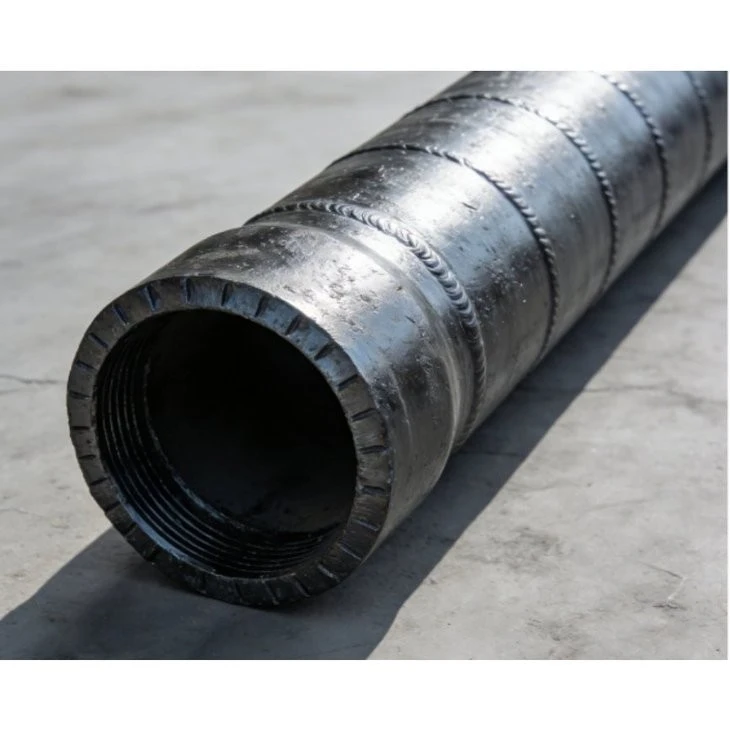
DN500 sits between DN40 and DN2600 on this casting range, and it is the size that appears most often in municipal replacement work. The barrel is ductile iron, poured to ISO2531, EN545 and GB/T 13295. Pressure runs Pn10, Pn16, Pn25 and Pn40; a feeder main and a large distribution trunk both sit inside that range. End choices include T-type, K-type and N-type socket-and-spigot sections plus a flanged option for valve chambers and pump station tie-ins. This water pipe serves water supply, gas supply and oil pipe networks. Small diameters feed housing blocks and branch loops; the large diameters carry trunk flow under arterial roads and embankments. Class selection follows the maximum line pressure rather than the average working pressure, so a transient surge does not push the joint past its rating.
How the barrel and joint behave
One end flares into a socket, the other stays straight as a spigot. In T-type, K-type and N-type arrangements the spigot enters the bell; a ring gasket between the two faces compresses as the joint seats, sealing the line under service pressure while allowing a little angular deflection. K-type arrangements retain the gasket with a locking profile that resists pull-out under axial movement; N-type variants use a deeper bell for lines laid on uneven bedding. Flanged ends bolt two flat rings together through a gasket, a connection that comes apart easily at valves and chamber entries. A T-type joint pipe pushes home with hand-and-pry force, faster than bolting each length along an open trench. The wall carries soil load plus internal pressure without permanent deflection, and the ductile iron pipe body flexes slightly when backfill settles. Gasket compression stays uniform around the bell as long as the spigot enters square; a skewed insertion leaves one side under-sealed and shows weeping after the first pressure test.
What the drawing shows
| Part | Detail |
|---|---|
| Body material | Ductile Iron |
| Size range | DN40–DN2600 |
| Model reference | DN500 |
| Pressure rating | Pn10, Pn16, Pn25, Pn40 |
| End connection | T-Type, K-Type, N-Type and Flanged Type |
| Standard reference | ISO2531, EN545, GB/T 13295 |
| Typical use | Water Supply, Gas Supply, Oil Pipe |
| Product type | Ductile Iron Pipes |
| Category | Ductile Iron Pipe |
| Brand mark | YH |
| Country of origin | China |
| Minimum order | Min. Order: 1 Piece |
| Delivery window | 20 days (1–1 Tons); to be negotiated (>1 Tons) |
| FOB range | US $600–1,000 / Piece |

Where these end up
Roadside trenches take the buried water main that carries treated supply from the reservoir to street take-offs. Gas networks and oil runs use the same casting family where soil contact and modest pressure dominate over chemical process duty. Utility corridors, embankment crossings and treatment-plant feed lines all show up on the order list. Small branches feed housing blocks; the large diameters go under arterial roads. Around DN500 the work concentrates: district replacements pull out old cast lengths and drop new ones into the same cut. Foundry output reaches 10,000 t/year, enough to keep long roadworks on schedule. In supply networks the line runs from service reservoir to district metering points; in gas and oil duties the same barrel carries the product through open-country corridors and road crossings. Trench depth, groundwater level and soil corrosiveness narrow the diameter and class choice before the first length is strung. Where the buried route crosses a lot line, the water pipe section is laid to the same cover depth on both sides, so no transition drops below the frost or traffic protection required at either parcel.

Trench laying notes
String a sling under each water pipe length. Never drop the barrel into the trench. Brush grit from the socket interior and the spigot bevel before the gasket seats; for a T-type joint pipe, check the gasket groove for sand, grease the sealing face lightly with compatible compound, push the spigot to the marked line, then check the joint angle before backfill. Flanges go on in cross sequence so the gasket compresses evenly. Run the hydrostatic test before bedding closes the run. Bedding material sits under the barrel in a smooth layer free of sharp stones; backfill is placed in lifts and compacted around the sides before the top cover goes on. On patrol, watch chamber entries for weeping and road crossings for settlement marks; record any soft joint for targeted repair.
Before you place the order
Match diameter to calculated flow, pick the pressure class against maximum line pressure, and choose socket-and-spigot or flanged ends to match the existing ductile iron pipe. Trench depth and soil type narrow the choice further, especially under traffic lanes; the water pipe selection also accounts for cover depth where traffic rolls over the route. On the shop floor, castings pass surface inspection, dimensions are sampled against the DN500 listing, and pressure testing follows the ISO2531, EN545 and GB/T 13295 references listed in the drawing table. Pieces carry the YH mark before packing. One piece can be ordered, FOB US $600–1,000 per piece; production takes 20 days for 1 to 1 ton, and orders beyond that tonnage are negotiated against the 10,000 t/year capacity. The buried water main drawing should list end type, class and bedding condition before the first trench is opened. Spare gaskets and a sample joint record travel with the batch so the laying crew can re-seat a bell if the test shows a weep. Lead-time schedules assume standard gasket sets; special outlet configurations are flagged at drawing review before casting opens.
Hot Tags: Ductile Iron Buried Water Pipe, China Ductile Iron Buried Water Pipe manufacturers
You Might Also Like


Send Inquiry