

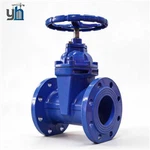


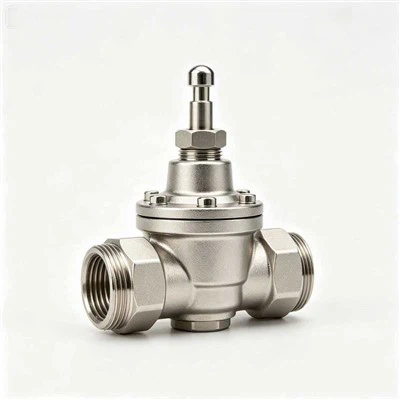
Pneumatic Pressure Reducing Valve
Two small waterways and one control chamber do the whole job. A needle valve feeds a trickle of inlet water into the chamber above the main disc, and the pilot valve drains that chamber into the downstream pipe. When the outlet pressure climbs above your set point, the pilot valve closes, the chamber fills and its pressure pushes the main disc shut. When the outlet pressure falls, the pilot valve opens, the chamber drains and the inlet pressure pushes the disc open again. Once the flow settles, the chamber fills and drains at the same rate, the disc stops moving, and so does the outlet pressure. On a normal installation the outlet holds within about five percent of the set value across the whole flow range.
Why it holds up in service
The main disc opens quickly and closes slowly. That keeps water hammer out of the riser and stops the valve slamming into its seat every time a tap shuts somewhere upstairs. The body is ductile iron as standard, with cast steel and 304 stainless bodies available for corrosive or potable water duty. The pilot valve, needle valve, control ball valve and pressure gauge all sit on one manifold, so setting and servicing happen in one place instead of three. The adjusting screw locks, so a setting your technician dialled in does not drift away by itself.
Where these valves go
Most of them end up at the bottom of a riser in a tall building. Above roughly twelve floors the pressure arriving from the street is more than the upper fixtures can take and not enough for the fittings just above the valve, so the building is split into zones and one of these sits at the head of each zone. It does the job of a break tank or an intermediate tank without the tank, the booster pump, the floor space or the cleaning. Outside buildings, they turn up on district metered areas, schools, hospitals, hotels, factory process water lines and irrigation mains, anywhere a municipal supply arrives too high and has to be brought down to something a pipe and a fixture can live with. On combined fire and domestic risers it can also be arranged to close off the domestic branch on a fire signal, so the fire flow gets the full inlet pressure.
Testing, flanges and delivery
Every valve is shell tested at 1.5 times its rated pressure and seat tested before it is packed, and the test report travels with the shipment. Flange drilling can be supplied to GB, ANSI or DIN, so tell me which standard your site uses and I will match it. DN40 is a size we hold, and orders leave through Tianjin with a two to three week lead time.
| Model | YH200X-P |
| Nominal Diameter (Min Size) | DN40 |
| Nominal Pressure | PN16 (1.6MPa) |
| Body Material | Ductile Iron GGG50 |
| Connection Type | Flange Connection |
Hot Tags: pneumatic pressure reducing valve, China pneumatic pressure reducing valve manufacturers, air line pressure reducer, building water pressure regulator, Piston Pressure Reducing Valve, pressure reducing valve diaphragm, process pressure reducing valve, water pressure reducing valve
Previous
No InformationYou Might Also Like


Send Inquiry