



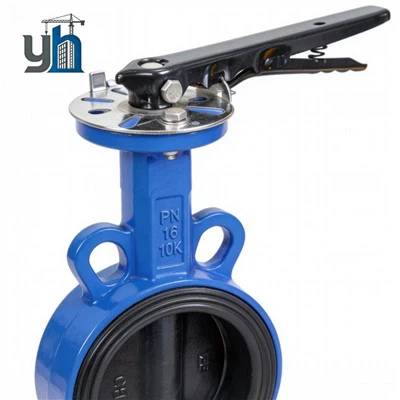
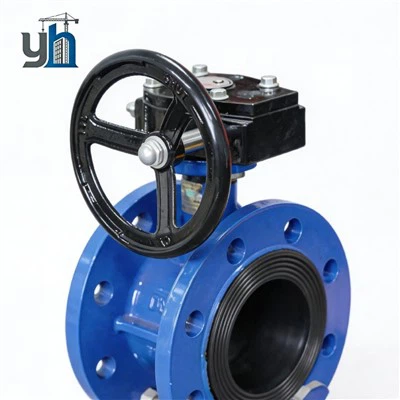
Wafer Hard Seated Butterfly Valve
MOQ 5 pieces, cast valve body. FOB price from US $11 up to US $880 per piece.
Wafer Hard Seated Butterfly Valve
Air and water runs under pneumatic control
Crews mount this butterfly valve at air, water and industrial process lines, where a quarter-turn of the disc moves from full open to nearly closed. Access around the body matters for the actuator or lever: a butterfly in a chamber needs space above the shaft for the drive to turn, and the flange bolting stays clear of the disc edge. These valves appear on cooling loops, fire water mains and service lines, whichever run needs frequent adjustment between open and closed. Access should be planned before install.
Size and rating entries appear in the table further down the page for comparison with the line.

Cast iron disc body for industrial process duty
Casting material on this entry is Cast Iron; the body spans the main and supports shaft bearings on both sides. Seal arrangement follows the hard seat on a single-eccentric disc listed for the duty. External corrosion, flange loads and bore fluid all set the body choice, and bearing pockets are kept clear of grit during install. The disc, shaft and seal ring are the working parts inside the body; the casting spans the main while the disc turns on the shaft bearings. Soft inserts give a tight shut-off on clean media, and metal seats handle hotter or coarser duty; the choice follows fluid temperature and particle load. Shaft bearings are the first place play appears, and crews check disc edge movement before replacing the seal ring. Disc, shaft and seal ring do the working while the casting spans the main, and bearing pockets are kept free of grit during install so the shaft turns without side play through each quarter-turn stroke.
Wafer end sandwiched between line flanges
Connection listed is Wafer. Wafer patterns clamp between adjacent flanges, while flanged patterns add a ring bolted to the mating flange. Grooved ends, where listed, mate to grooved pipe with clamp and gasket for quick takedown on service mains. End type matches the spool drawing to avoid an adaptor on site.
| Label | Record |
|---|---|
| Listed type of the assembly | Wafer Butterfly Valve |
| What the body is cast or made from | Cast Iron |
| Working rating across the bore | Pn10, Pn16 |
| What the valve family is listed as | Butterfly Valve |
| Approval reference on the entry | - |
| How the ends join the line | Wafer |
| Duty the piece is assigned to | Industrial, Air, Water |
| Nominal bore range covered | - |
| Drawing number carried by the piece | - |
Hard seat wear on frequent opening cycles
The disc follows the shaft through a quarter-turn cycle: open, throttling angles and closed seat against the body ring. Seat compound sets temperature and fluid limits, and bearings wear before the seal under repeated actuation. Long narrow-angle throttling invites vibration that can loosen the seal over time. Cycling wears pockets and shaft bearings before the seal, and edge play shows ahead of leakage. Long narrow-angle throttling is avoided to keep vibration from loosening the insert. Eccentric geometry lifts the disc off the seat as it turns, limiting rubbing to near-closed and extending insert life. Seat compound sets the temperature and fluid limits for the duty, and bearings wear before the seal under repeated actuation, so play at the disc edge is checked before any ring replacement is ordered for the line. Check the seat at each inspection.
Renewal parts track disc and shaft, not the casting. Ring, bearing and edge move as a set when play appears, and the insert for busiest sizes sits beside the bearing kit in stock. Pockets wear under actuation first and are serviced before seal leakage shows. Castings hold flange loads for years once the moving parts are kept in order.
Fluid temperature and particle load set which seat compound or closure style suits the duty, and the listing records these limits against the valve class on the project drawing. Where the medium carries grit or condensate, the seat is examined more often than the body shell, since the insert wears first under cycling. Compare the drawing to the listing before commitment.
Installers verify the end connection against the neighboring pipe, confirm the closure travels through its full stroke, and keep protectors and wrapping on until the joint closes. The sealing surface is inspected for trapped dirt before pressure reaches the seat, and any weep noted on the initial test is logged against the seat insert rather than the housing. Routine inspections then focus on the wear parts rather than the casting itself.
Weeping after shut-down usually traces to the seat rather than the casting, and a worn insert or trapped grit on the sealing face is renewed on the next inspection rather than waiting for a full valve pull.
Process line sizing across the wafer range
Across the listed bore band the rating sits at Pn10, Pn16; the drawing should be checked for bore, end form, seat material and class before the order is cut. The source listing leaves the standard record blank, so the project drawing should be checked against the line's required standard before the valve is committed. A small trial order is acceptable where the listing allows; the bracket and delivery time are quoted against bore, end configuration and quantity.
Hot Tags: Wafer Hard Seated Butterfly Valve, China Wafer Hard Seated Butterfly Valve manufacturers, butterfly valve, ductile iron industrial Anti corrosion butterfly valve, high pressure butterfly valve, irrigation butterfly valve, large diameter butterfly valve, Wafer Cast Iron PN10 Butterfly Valve
You Might Also Like


Send Inquiry