





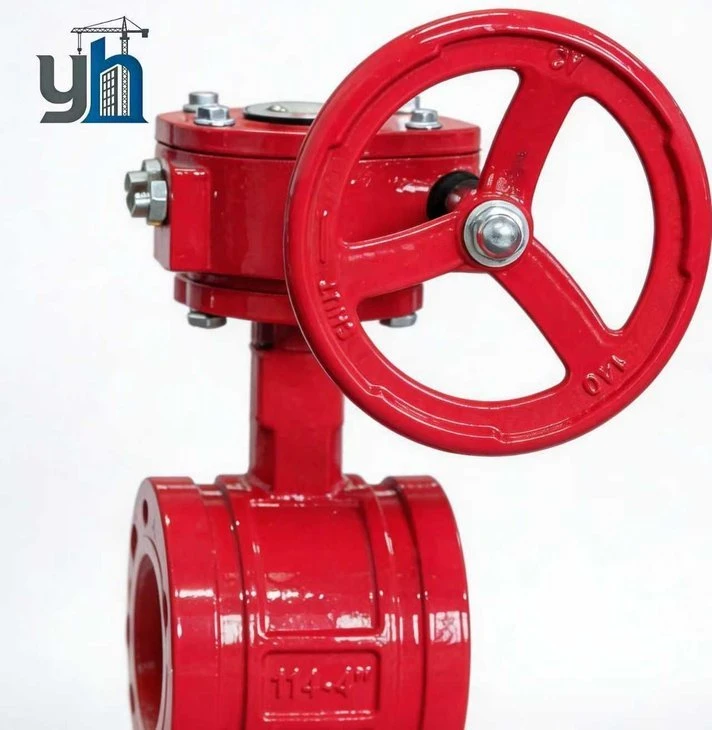

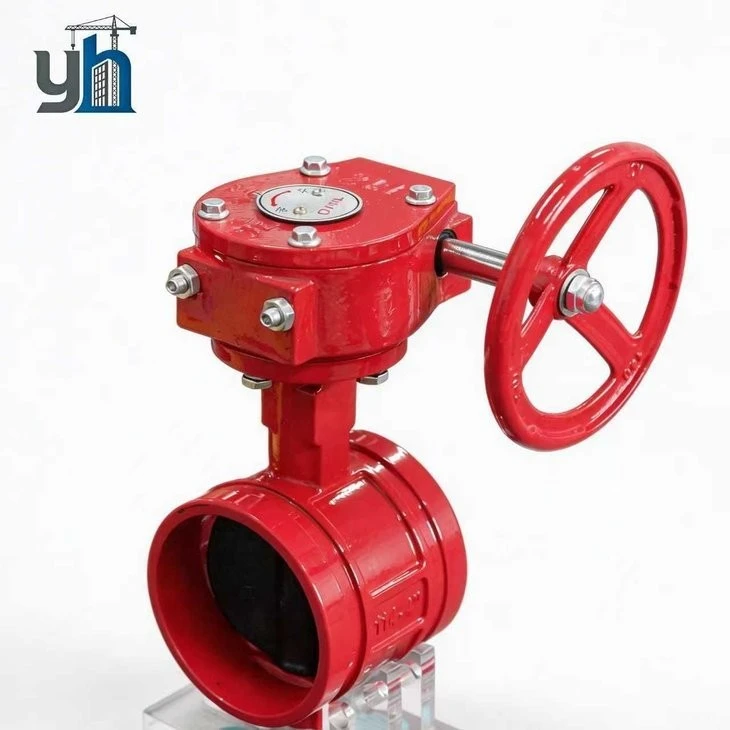
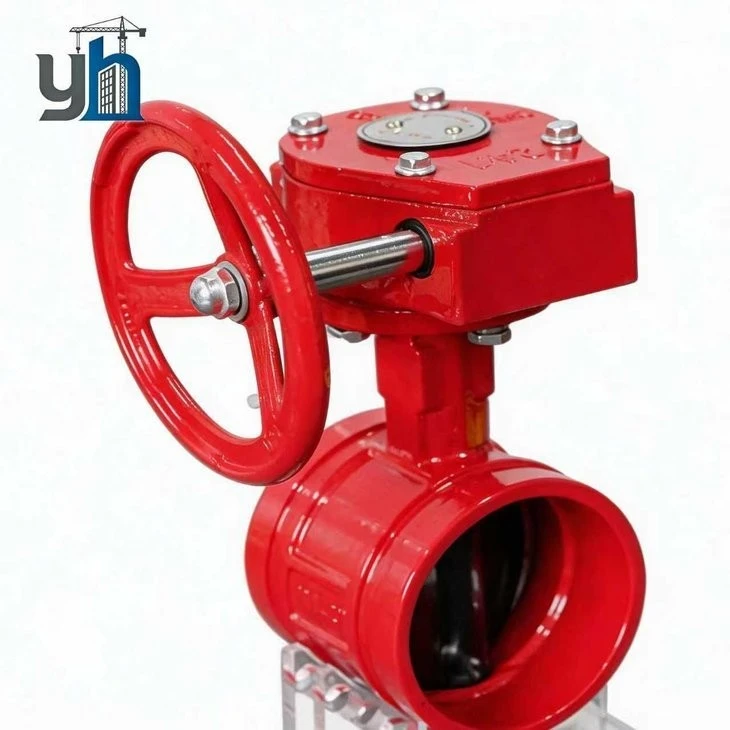
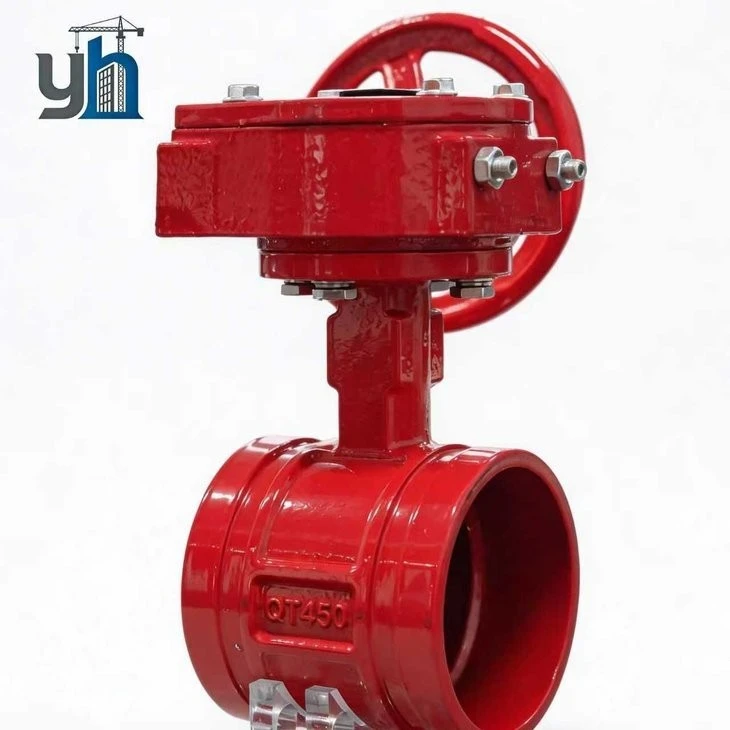
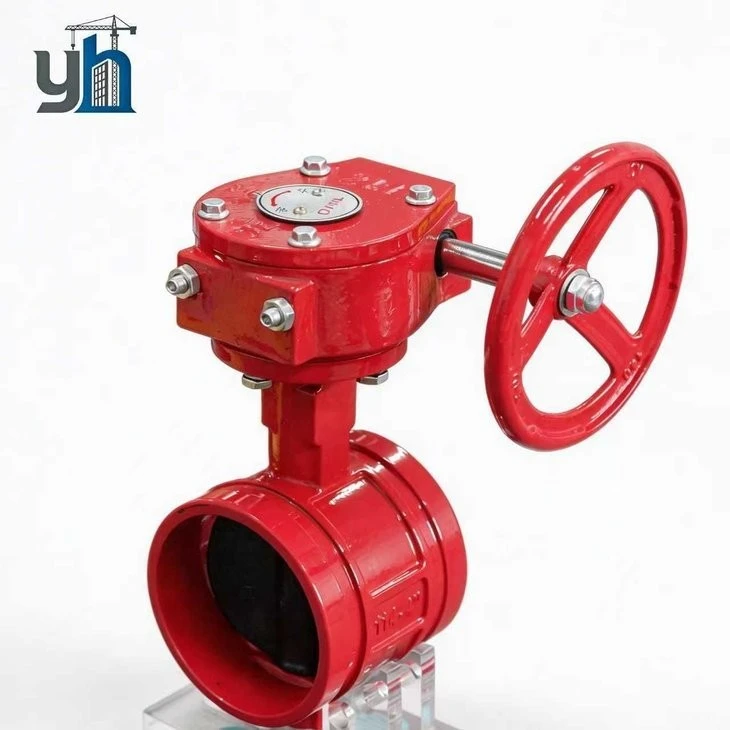
Carbon Steel Grooved Butterfly Valve
Lead time near 20 days, MOQ 5 pieces. Soft or metal seat, FOB from US $11 up to US $880 per piece.
Carbon Steel Grooved Butterfly Valve
Sprinkler mains held open by a grooved butterfly
The butterfly valve is installed at fire protection water and sprinkler mains, turning an eccentric disc to regulate flow through the main. Access around the body matters for the actuator or lever: a butterfly in a chamber needs space above the shaft for the drive to turn, and the flange bolting stays clear of the disc edge. These valves appear on cooling loops, fire water mains and service lines, whichever run needs frequent adjustment between open and closed. The setting follows the project drawing.
The table below carries the listed size band and working rating recorded for this valve listing.

Carbon steel body for fire water duty
Casting material on this entry is Carbon Steel; the body spans the main and supports shaft bearings on both sides. Seal arrangement follows the soft seat or metal seat, single-eccentric disc listed for the duty. External corrosion, flange loads and bore fluid all set the body choice, and bearing pockets are kept clear of grit during install. The disc, shaft and seal ring are the working parts inside the body; the casting spans the main while the disc turns on the shaft bearings. Soft inserts give a tight shut-off on clean media, and metal seats handle hotter or coarser duty; the choice follows fluid temperature and particle load. Shaft bearings are the first place play appears, and crews check disc edge movement before replacing the seal ring. Disc, shaft and seal ring do the working while the casting spans the main, and bearing pockets are kept free of grit during install so the shaft turns without side play through each quarter-turn stroke.
Wafer and grooved ends on sprinkler piping
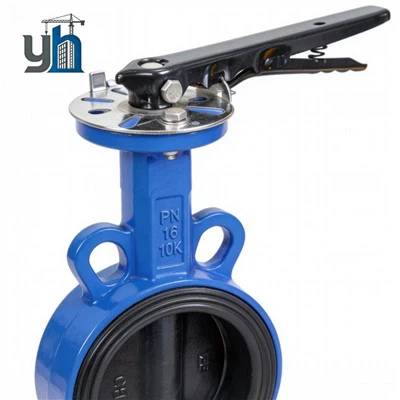
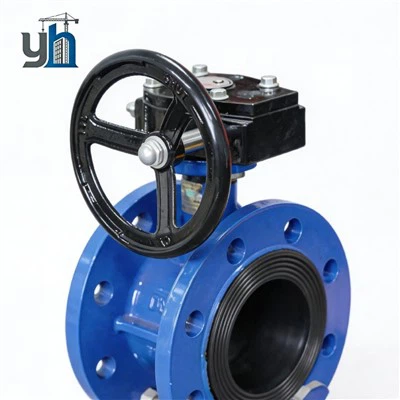
The end form listed is Wafer. Wafer bodies sandwich between two line flanges, and flange bodies bolt their own ring to a matching flange on the main.
| Piece | Marking |
|---|---|
| Model reference on the listing | - |
| End form matched to the spool | Wafer |
| Listed service sector for the valve | Fire Protection, Water |
| Approval reference on the entry | - |
| What the valve family is listed as | Butterfly Valve |
| Working rating across the bore | Pn10, Pn16 |
| Nominal bore range covered | - |
| Listed type of the assembly | Butterfly Valve |
| What the body is cast or made from | Carbon Steel |
Turbine drive turning the eccentric disc
Seat material sets temperature and fluid limits: soft inserts suit clean water and air up to moderate heat, metal seats handle hotter or coarser duties. Frequent cycling wears the bearing pockets and shaft bearings first, and crews check play at the disc edge before seal replacement. The valve should not be left throttled at a narrow angle for long stretches where flow-induced vibration can work the seat loose. Soft inserts take clean water and air at moderate heat; metal seats take hotter and coarser media. Lever, gear or actuator torque travels through the shaft to the disc, and the drive holds angle against flow pressure. Seat leakage sends crews to bearing alignment and seal ring before any body replacement is considered. Seat compound sets the temperature and fluid limits for the duty, and bearings wear before the seal under repeated actuation, so play at the disc edge is checked before any ring replacement is ordered for the line. The spare matches the installed main.
Spare parts follow the disc and shaft rather than the casting. Seal ring, shaft bearing and disc edge are checked as a set when play appears, and the soft insert for the most cycled size is kept in stock alongside the bearing kit. Frequent actuation wears the bearing pockets first, so these are greased or renewed before the seal itself shows leakage. The casting rarely needs replacement as long as flanges stay square and the disc turns freely on the shaft.
The metal sees internal fluid continuously and ambient moisture only around the flange and bonnet, so corrosion attention follows the wetted parts first. Coating, wrapping and external paint follow the plant's own corrosion practice once the piece enters the line, and the casting itself keeps service after the sealing parts are renewed. Inspect the exterior at each visit.
On site the valve is set in place with the correct flange bolts or weld bevel, and the closure is cycled once from fully closed to fully open to confirm the stem, disc or wedge moves without binding. Grit on the seat face is cleared before pressure is applied, and the joint is centered so the seal compresses evenly around the bore. A slow leak after the first test points to the seat rather than the shell, which is where maintenance attention usually starts.
A slow seat leak shows up on the first pressure test more often than a body failure, so maintenance attention goes to the insert, the hinge or guide surfaces and the sealing face before the casting itself is questioned.
Fire protection line sizing across the range
Size runs the listed bore band and the rating covers Pn10, Pn16; the order should confirm bore, end form, seat type and pressure class against the piping drawing. The source listing leaves the standard record blank, so the project drawing should be checked against the line's required standard before the valve is committed. The first order may run to a single piece where permitted; pricing and lead schedule follow the quotation once size, end form and count are agreed.
Hot Tags: Carbon Steel Grooved Butterfly Valve, China Carbon Steel Grooved Butterfly Valve manufacturers, electric butterfly valve, Flanged Cast Iron PN10 Butterfly Valve, low pressure butterfly valve, mechanical flow control valve, Wafer Cast Iron PN10 Butterfly Valve, water control system valve
You Might Also Like


Send Inquiry