



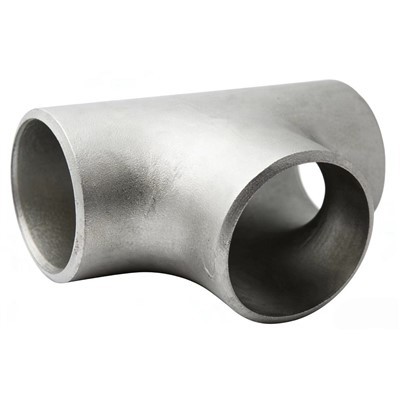
Stainless Steel Socket Weld Tee
Custom sizes are accepted and OEM is welcome. FOB price runs from US $2.2-95 per piece, MOQ 10 pieces.
Stainless Steel Socket Weld Tee
Branch connection on a power station loop
The stainless steel tee serves branch connections in thermal power plant piping and auxiliary loops. It is a Stainless steel body in SS304, SS316 and SS316L; Common DN50 with dimensions checked against the spool list. The listed reference records the product type as Tee. The listed model reference is DN50. In service the body has to hold internal pressure and the modest external loads from clips, supports and occasional contact during maintenance, while the outside surface takes whatever corrosion practice the installation applies after the line goes into service. Contractors usually pull the bore, wall and end form from the spool list before the shop cuts the piece, so the batch matches the take-off rather than a mixed stock assortment. The route often turns again within the same block, so adjacent pieces are listed together on the same drawing sheet. The fitting is staged alongside the spool it joins.

Stainless body for service water and steam
How the material behaves under service depends on the medium carried and the environment around the line. The wall section carries internal pressure without permanent deflection, and the body flexes only slightly when bedding or supports settle under a settled line. Where the piece meets the atmosphere, surface condition is checked against the order record before packing, and any end that does not match the recorded bore is set aside rather than shipped with the batch. Over repeated temperature cycling and occasional wetting, the material keeps its dimensional stability, and the joint itself remains the part that needs the closest watching during the first pressure test. Buyers on a scheduled contract usually order several matching pieces in one slot so fabrication does not stop between sections of the same run.
The shop floor keeps these in size order, so the wrong bore jumps out before packing.
Welded, threaded and socket-weld ends
The listed end form governs how the piece seats against the adjoining pipe. For welded preparations the bevel and outside diameter are matched flush to the mating tube before the joint closes, while threaded and socket-weld options follow the thread or socket profile recorded on the listing. A skewed insertion leaves one side under-sealed and usually shows weeping after the first hydrostatic check, so the crew seats the piece square and checks the joint angle before backfill or support clips go on. The joint has to stay aligned with the centerline pattern on the spool drawing, and the recorded dimension on each end is compared against that drawing before the piece leaves the shop. Where flanges are involved, bolts are pulled in cross sequence so the gasket compresses evenly around the full ring.
Auxiliary and condensate line placements
These pieces end up on branch connections in thermal power plant piping and auxiliary loops. Around a station or plant the line routes between racks, decks, pump houses and individual units, and each section calls for the fitting that matches its own spool list. Small branches feed local take-offs while larger mains carry the main flow through open corridors and crossings, and the same body type appears in both sizes across the order record. Field crews stage the pieces along the trench or rack before stringing begins, sorting by nominal size so the right fitting reaches the right joint at the right moment. Local conditions such as cover depth, groundwater level and soil type narrow the size and class choice before the first length is laid in.
On site, the piece is staged alongside the spool it joins, and the crew checks nominal size, wall and end condition before the first connection is made. Supports and clips are placed so the body does not carry an unintended external load, and the joint is left accessible for the first pressure test and any later inspection. Where the run crosses a trench, chamber or rack, the fitting is aligned to the centerline pattern on the drawing rather than pulled straight by hand. Receiving inspection sorts the batch by size against the order reference, and any piece that does not match the recorded bore or end form is set aside instead of being mixed into the installed run. Spare pieces for future maintenance are held in store by bore and wall, separate from the current installation.
The bore follows the drawing. The end prep matches the mating tube. The joint seats square before clips go on.
| Group | Content |
|---|---|
| Model reference | DN50 |
| Intended service | Thermal Power Piping |
| Body material | Stainless Steel (SS304/SS316/SS316L) |
| Bore and size range | DN50 |
| Listed fitting type | Tee |
| End connection form | Butt Weld, Threaded, Socket Weld |
| Standard or certification record | - |
| Product category | Tee |
| Pressure rating | - |
Dimension check against the spool list
When the order comes through, nominal size, wall and end condition are recorded on the sheet, and the shop cuts the piece to those dimensions before it moves to surface check and packing. The certification field on the source listing is left open, so the governing standard for the final run should be confirmed against the project specification before installation. Custom dimensions are prepared to order instead of being pulled from a fixed stock bin, which is why the size band in the listing bracket stays wide across the range. One piece may open the order; standard lot timing and the price bracket are noted in the listing. Each piece in the batch carries the same order reference, which lets receiving inspection sort the pieces by size without opening every crate. Spare pieces for future maintenance are held in the store by bore and wall, separate from the batch installed on the current run.
Surface and end check come before packing. A fresh weld fails inspection most often because grit sat on the bevel.
Hot Tags: Stainless Steel Socket Weld Tee, China Stainless Steel Socket Weld Tee manufacturers, food grade stainless fittings, industrial pipeline system fittings, Seamless Stainless Steel Tee, stainless steel low leakage fittings, stainless steel pipe hardware, stainless steel threaded connector
Next
No InformationYou Might Also Like




Send Inquiry