



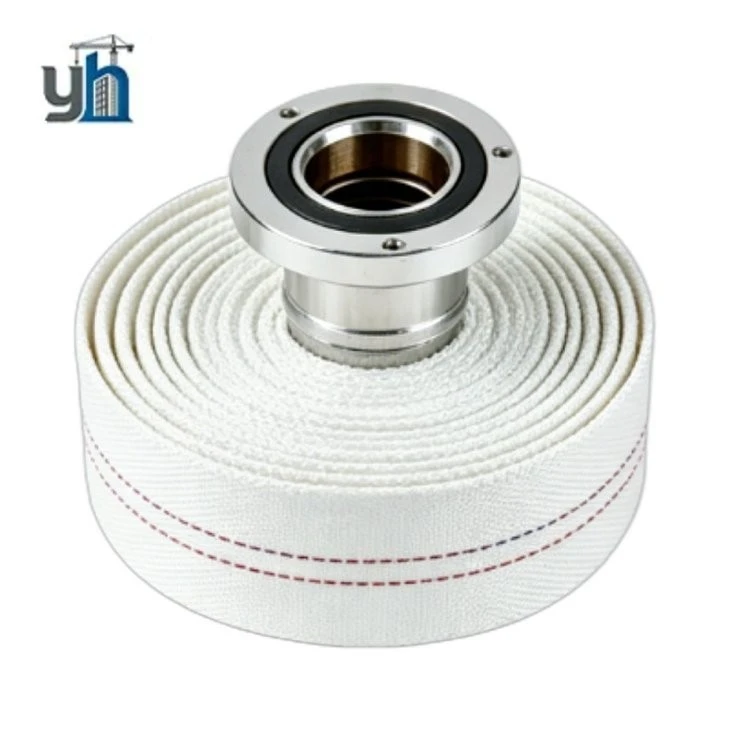


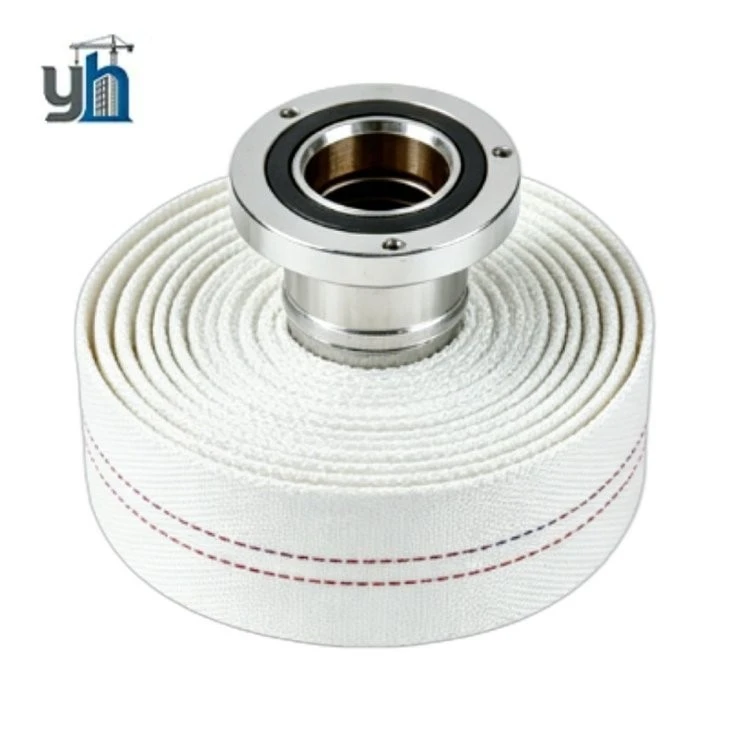
Rubber Lined Woven Fire Hose
We make about 3,000,000 pieces a year, MOQ 1,000 meters. FOB price US $1.5 to 2.2 per meter.
Rubber Lined Woven Fire Hose
Woven jacket over a rubber inner liner
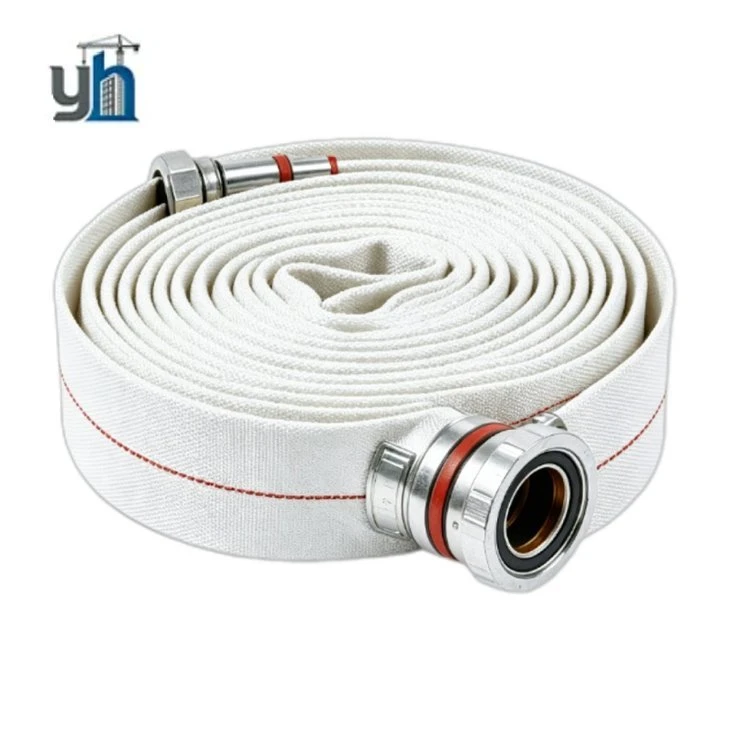
This fire hose pairs a woven outer jacket with a rubber inner liner, the flexible lay-flat construction carried on reels and folded rolls for emergency deployment in yard, station and industrial site service. The woven jacket absorbs external abrasion and keeps the liner protected while the hose drags across concrete, gravel and workshop floors; the rubber liner holds the water inside under pressure and wipes clean after each run. Lined woven hose flexes around corners and hose bends without the rigid feel of solid pipe, which is why it remains the standard attack-line form on emergency runs.
Drag it across the yard floor before the alarm sounds. A stiff hose wastes time on the way in.
DN50, DN65 and DN80 across 20, 25 and 30 metre lengths
The specification lists DN50/65/80 diameters in 20, 25 and 30 metre lengths, and model references on the record read DN50 / DN65. Diameter decides flow capacity and coupling size; length decides how far one roll reaches from the hydrant or pump outlet before a second line couples on. Brigade and site crews count the route distance first, then pick the length that covers the run without leaving a short fold at the end of the roll. Hose diameter should match the nozzle and hydrant outlet already in service, so the coupling steps from one diameter to another only where the layout genuinely needs it. Buyers list diameter and length together on the order line rather than choosing one without the other.
Diameter matches the outlet. Length matches the walk to the fire.
Pressure bands from 0.8 to 1.6 MPa
Three pressure bands appear on the listing: 0.8, 1.0 and 1.6 MPa. These working pressure levels cover lighter standby hose, general attack lines and higher-rated service runs, and the chosen band should match the pump discharge and hydrant pressure shown on the site fire system schedule. A hose rated below the line pressure risks swelling and leak at the coupling under a long run, while an over-rated line adds cost and stiffness without benefit. Certification record carries no assigned value on the source listing, so any required approval is confirmed against the project tender specification before supply.

Plug-in couplings at each hose end
The joint type on the listing is a hose coupling in plug-in form, fitted at both ends of the liner so the roll couples to a hydrant outlet on one side and a nozzle on the other. Plug-in ends lock with a positive seat once pushed home, and the seal face keeps the line dry under working pressure. Crews inspect the coupling thread or lug condition on each cabinet visit, because a worn coupling weeps long before it fails outright. Joint standard and finish follow the existing hose stock on site; the listing records no assigned coupling finish beyond the plug-in type, so buyers confirm the match against the hose locker before bulk supply.
Stored rolls and emergency deployment
Stored on reels, folded in boxes or hung in lockers, these rolls sit ready for the first response, unrolled rather than unfolded in a tangle when the alarm goes. Site emergency plans place hose stations along the same routes the brigade walks, so a roll reaches the risk area within the line length listed on the specification. Maintenance checks the jacket for abrasion cuts, the liner for soft spots and the couplings for corrosion, and a damaged roll comes out of service before a real run. Spare rolls ride along with hydrant and nozzle restocking, held in the store by diameter and length.
How lined hose rolls store between calls
Supply bands move by meterage from small trial lots to repeat bulk supply, and custom lengths are accepted when a cabinet or reel calls for a cut outside the listed 20, 25 and 30 metre rolls. Before packing, couplings get protectors and the roll rests folded flat so the liner does not set in a tight coil. At receiving, couple a sample end to the hydrant stock and run a low-pressure check for weep at the seal face.
Between deployments the roll hangs on its reel or folds in its box, and maintenance inspects the woven jacket for abrasion cuts, the liner for soft spots and the couplings for corrosion or worn lugs. A jacket cut that exposes the liner in a small spot still passes a casual look but will weep under pressure, so the roll comes out of service before a real run rather than after it fails on the line. The liner gets a low-pressure rinse after each wet use, folded back into the roll without a tight coil that sets a crease in the rubber, and the coupling ends get protectors until the next deployment. Stored hose keeps its flexibility better in a dry cabinet than outdoors in direct sun, where ultraviolet light dries the weave and brittles the jacket over several seasons.
Inspect the jacket, the liner and the couplings. One weak spot takes the roll out of service.
Between deployments the roll hangs on its reel or folds in its box, and maintenance inspects the woven jacket for abrasion cuts, the liner for soft spots, and the couplings for corrosion or worn lugs before the next drill. A jacket nick that exposes the liner still looks serviceable at a glance but will weep under pressure, so the roll comes out of service before a real run rather than after it fails on the line. After a wet use the liner gets a low-pressure rinse, folded back without a tight coil that sets a crease in the rubber, and coupling protectors go back on before the roll returns to storage. Stored hose keeps flexibility better in a dry cabinet than outdoors in direct sun, where ultraviolet light dries the weave and brittles the jacket over several seasons. Diameter and length are listed together on the order line, so a reel that needs a thirty-metre roll does not receive a twenty-metre one by default. Coupling ends match the hydrant and nozzle stock already held on site, and a sample end gets a low-pressure check when the roll arrives. A trial order can start with a small meterage, and the per-metre bracket and delivery window follow the quotation.
| Piece | Marking |
|---|---|
| End connection | Hose Coupling (Plug-in) |
| Product category | Fire Hose |
| Certification record | - |
| Listed application | Fire Emergency |
| Bore and outlet schedule | DN50/65/80; Length 20/25/30 m |
| Model reference | DN50 / DN65 |
| Working pressure band | 0.8 / 1.0 / 1.6 MPa |
| Listed unit class | Fire Hose |
| Body composition | Rubber |
Hot Tags: Rubber Lined Woven Fire Hose, China Rubber Lined Woven Fire Hose manufacturers, fire fighting equipment, fire fighting replacement parts, fire hose connector, Fire protection ball valve, fire protection hose fittings, fire sprinkler valve
You Might Also Like


Send Inquiry