





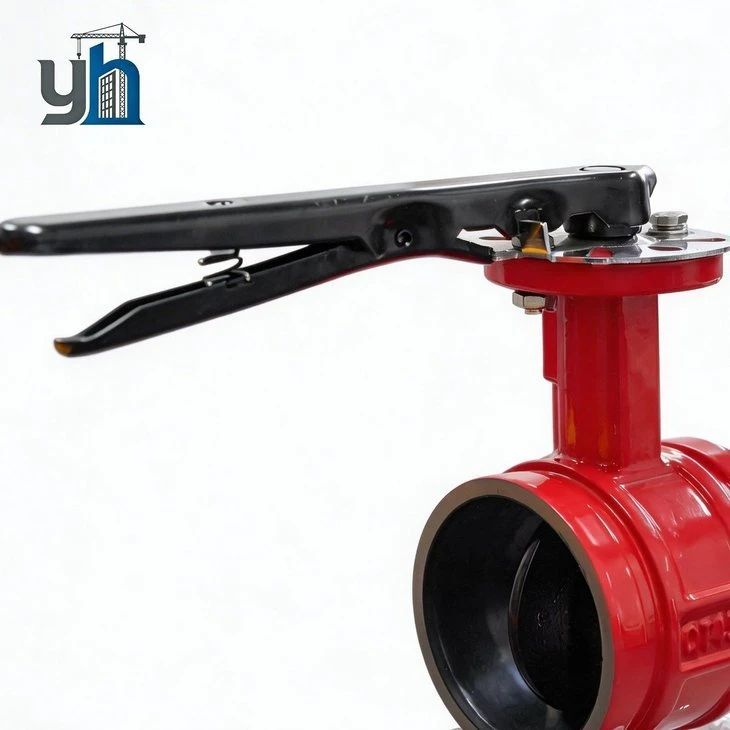

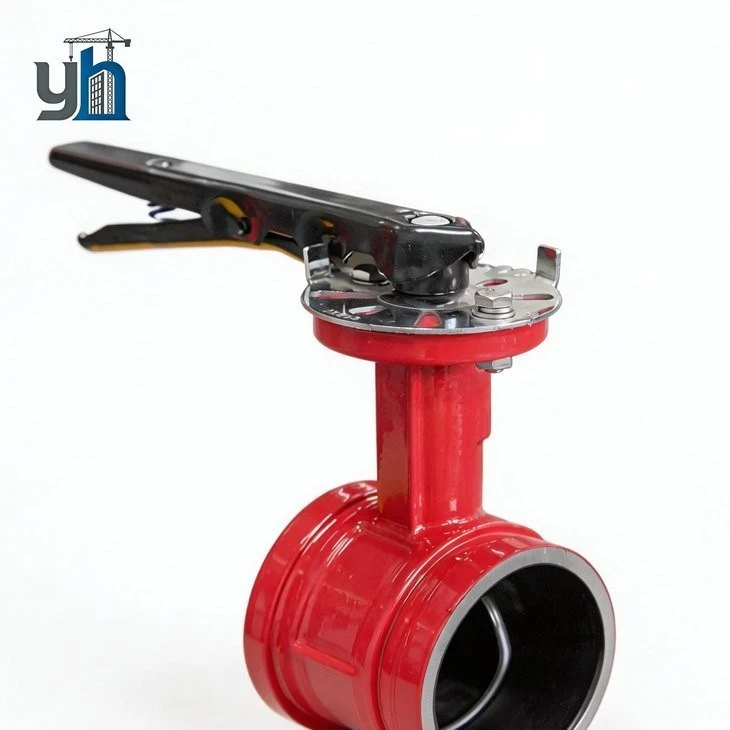
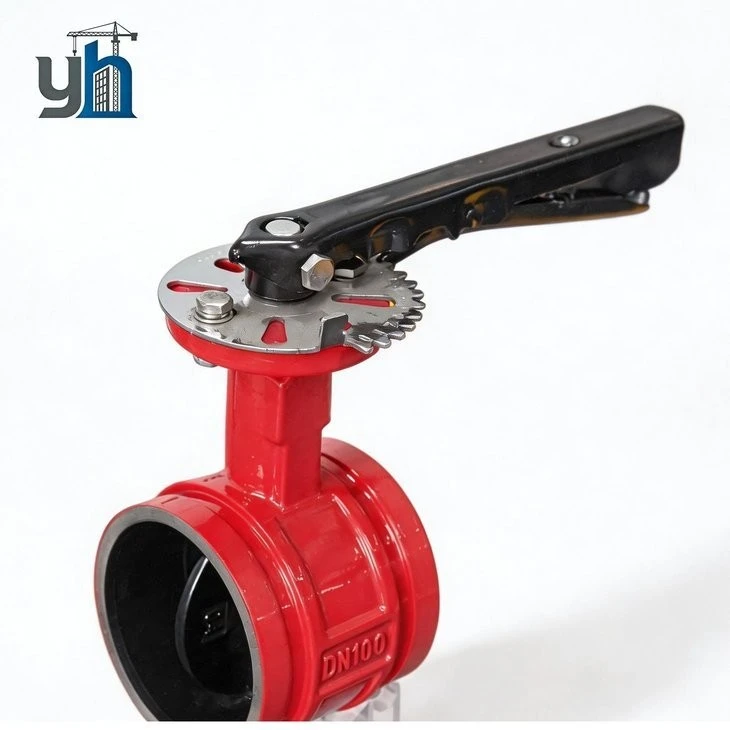
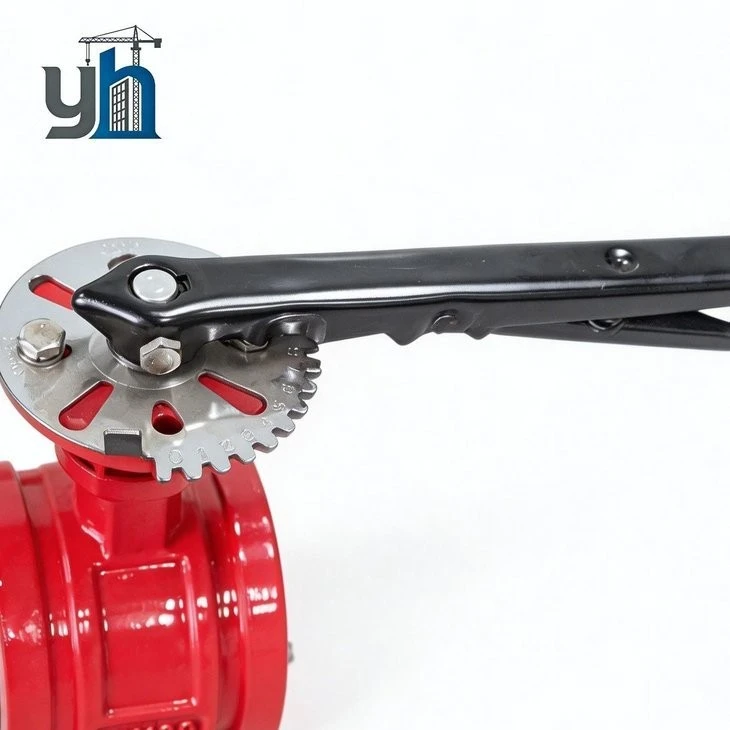
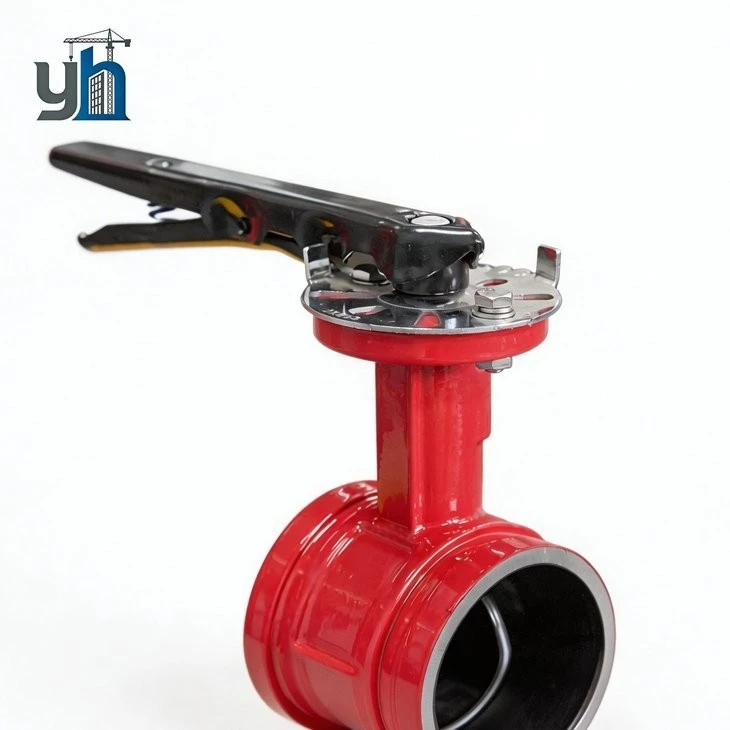
Flanged Grooved Wafer Butterfly Valve
Custom options are accepted, FOB pricing runs US $11-880 per piece, min. order 5 pieces.
Flanged Grooved Wafer Butterfly Valve
Cooling water loops on a generation unit
Crews mount this butterfly valve at power generation cooling and service water, where a quarter-turn of the disc moves from full open to nearly closed. On the main or branch header the butterfly sits where flow has to be throttled as well as shut off, and the quarter-turn disc gives a quick open-close action from the drive on top. The shaft bearings on either side of the body take the disc load, so alignment between body flanges stays square during fit-up. Bore and rating follow the listed size band and pressure class, matched to the line's maximum operating pressure rather than its average. Check the seat at each inspection.
Bore and pressure figures are set out in the table that follows the body description on this entry.

Cast body for service and cooling water duty
The disc and body come from a Casting listing, the casting or fabrication that spans the main and carries the shaft bearings on either side. The sealing arrangement is soft or metal seat on a single-eccentric disc. Before shaft and disc fit, the casting is inspected for flaws and bearing pockets kept grit-free. Shell loads come from flange bolts and nearby supports, and body metal matches the most aggressive line fluid rather than the cleanest sample. Inserts for the busiest sizes ride in the spares store, because seal renewal is faster than pulling the whole body. Disc, shaft and seal ring do the working while the casting spans the main, and bearing pockets are kept free of grit during install so the shaft turns without side play through each quarter-turn stroke.
Wafer or flange ends on the power block main
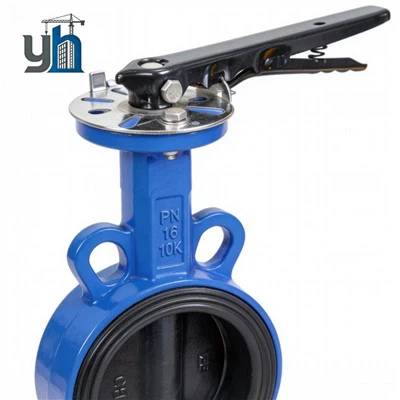
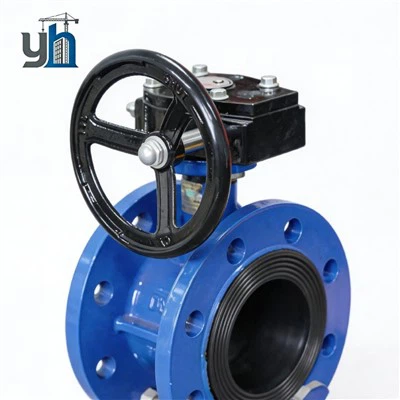
End form on this entry is Wafer / Flanged. A wafer body needs only the two main flanges to clamp it, and a flanged body bolts its own ring to the mating face. Flange rating and face are checked against neighboring valves on the same run, and the short wafer length suits chambers and skids with limited space.
| Component | Reading |
|---|---|
| End form matched to the spool | Wafer / Flanged |
| Model reference on the listing | - |
| Construction metal of the housing | Casting |
| Nominal bore range covered | - |
| Catalog class shown for the piece | Wafer Butterfly Valve |
| Product family in the catalog | Butterfly Valve |
| Duty the piece is assigned to | Industrial Usage, Water Industrial Usage, Household Usage |
| Pressure class the body carries | Pn10, Pn16 |
| Approval reference on the entry | - |
Disc seat handling frequent cooling-water cycles
The disc follows the shaft through a quarter-turn cycle: open, throttling angles and closed seat against the body ring. Seat compound sets temperature and fluid limits, and bearings wear before the seal under repeated actuation. Long narrow-angle throttling invites vibration that can loosen the seal over time. Soft inserts take clean water and air at moderate heat; metal seats take hotter and coarser media. Lever, gear or actuator torque travels through the shaft to the disc, and the drive holds angle against flow pressure. Seat leakage sends crews to bearing alignment and seal ring before any body replacement is considered. Seat compound sets the temperature and fluid limits for the duty, and bearings wear before the seal under repeated actuation, so play at the disc edge is checked before any ring replacement is ordered for the line. Access should be planned before install.
Renewal parts track disc and shaft, not the casting. Ring, bearing and edge move as a set when play appears, and the insert for busiest sizes sits beside the bearing kit in stock. Pockets wear under actuation first and are serviced before seal leakage shows. Castings hold flange loads for years once the moving parts are kept in order.
At each scheduled inspection the closure edge, seat face and hinge, guide or bearing surfaces are wiped clean and checked for scoring or play, and any soft seal showing a mark or permanent set is renewed before the next season of service. The record lists bore, end form and class for the replacement part. Small renewals keep the valve on the line.
Commissioning follows a simple check list: end form against the spool drawing, free movement of the closure from stop to stop, clean sealing faces and an even gasket or weld preparation at the joint. Once the line is pressurized, crews watch the seat and the packing area for weeping, and any soft seal is replaced before the valve is accepted into regular service. These checks take far less time than pulling a failed valve off an installed main.
A weeping joint is more often a worn seal than a cracked housing, and inspecting the insert, guide and seat face early keeps the closure dependable through repeated start-up and shut-down cycles without pulling the whole valve.
Station spares sized across wafer and flange bores
Across the listed bore band the rating sits at Pn10, Pn16; the drawing should be checked for bore, end form, seat material and class before the order is cut. The source listing leaves the standard record blank, so the project drawing should be checked against the line's required standard before the valve is committed. One piece can open a trial order; the quotation sets the price bracket and delivery window after bore, end form and quantity are confirmed.
Hot Tags: Flanged Grooved Wafer Butterfly Valve, China Flanged Grooved Wafer Butterfly Valve manufacturers, cast iron industrial Anti corrosion butterfly valve, electric butterfly valve, large diameter butterfly valve, mechanical flow control valve, tank outlet butterfly valve, throttling butterfly valve
You Might Also Like


Send Inquiry