



Stainless Steel T Type Pipeline Strainer
We pack in wooden cases and cartons. FOB pricing runs US $12-18 per piece, minimum order 500 pieces.
Stainless Steel T Type Pipeline Strainer
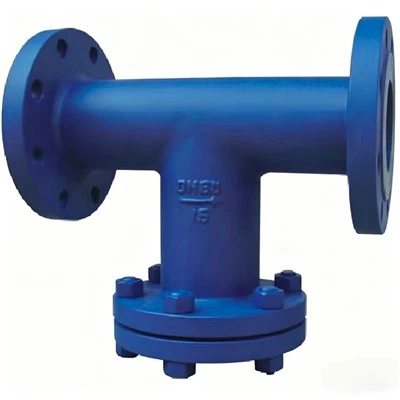
On a chemical feed line that runs clean-looking solvent, the first sign of trouble is usually a pump that loses suction and trips off load. The grit behind it rides in the fluid itself: weld slag knocked loose from the new header, scale stirred up during a flush, or fine solids picked up upstream, and it reaches the impeller before anyone notices the pressure drop. The YT-TS-001 stainless T strainer goes in front of that suction nozzle to hold the grit back, spanning DN15 to DN400 with ANSI, DIN or JIS flange drilling at Pn10, Pn16 or Class 150 to match the header class. No certification entry is fixed on the record; that point is confirmed when the order is booked. Pricing sits at USD $12 to $18 across the bore band, five hundred pieces is the minimum order, and the units leave the workshop in wooden cases and cartons.
Guarding pump suction on corrosive chemical lines
Walk up to a pump that has been pulled after a rough season and the damage almost always starts at the suction end. Sand, slag and mill scale ride in with the incoming fluid; the first moving surface they meet is the impeller, then the seal faces and wear rings, and repeated contact leaves grooves and leakage that eventually stops the machine. The strainer sits ahead of the suction nozzle so that debris meets the screen before it crosses that first moving part. Mesh follows the carried debris, not a default. A coarse 20 mesh screen suits raw water intakes where the debris is chunky, a 60 to 100 mesh cartridge fits chemical feed lines carrying finer solids, and the finest 200 mesh goes where sensitive seals or meter mechanisms sit downstream. Go too coarse and the grit slips through; go too fine and the basket clogs between clean-outs while the differential pressure climbs fast. Dosing skids, solvent transfer circuits and other corrosive media runs call for this unit because the housing has to resist the fluid itself, not only the particles carried in it, and cooling or condensate loops add the same screen ahead of heat exchanger inlets to keep scale and rust out of the tube passes. The carried medium and the required screen opening are checked together before the unit is built, so the cartridge actually suits the particles the line has to hold back.
The strainer sits ahead of the suction inlet, not behind the pump.
T branch chamber where the screen cartridge sits
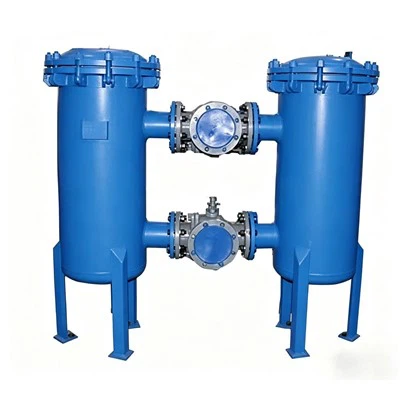
Inside the body, incoming flow enters through the line bore and turns down into the lower T-shaped branch, where the screen cylinder stands across the passage. Liquid passes through the mesh into the central outlet, while anything larger than the opening settles against the screen face or drops into the debris pocket at the bottom of the branch, held there instead of moving on toward the equipment behind the tee. A rim at the cartridge edge seats against the ledge in the body, so unfiltered flow cannot slip around the edge of the screen and reach the downstream side. When clean-out time comes, the cover fasteners are loosened and the cartridge lifts out through the branch cover; the dirt is flushed or shaken free, the screen goes back in, and the cover seals again, without cutting the body from the spool. On larger sizes the cover and cartridge may need a second pair of hands during removal, and the gasket gets inspected each time the basket comes out, replaced if compacted or nicked. The debris pocket below the screen gives coarse solids a gravity settling point between intervals, and the cover opening is sized so the cartridge pulls out without removing the body from the line. A spare cartridge waits in the plant store where shutdown windows are short, so a clean screen can be swapped in while the dirty one is rinsed later.
| Tag | Specimen |
|---|---|
| Model reference | YT-TS-001 |
| Certification record | - |
| Product family | T Type Strainer |
| End connection form | Flanged (ANSI / DIN / JIS) |
| Stated service | Corrosive industrial liquid filtration |
| Nominal size range | DN15 to DN400 |
| Body and seal material | Stainless Steel |
| Listed product category | Strainer |
| Listed pressure classes | Pn10 / Pn16 / Class 150 |
Stainless body chosen against aggressive media
The body material on the source table is stainless steel, and that choice follows the corrosive industrial liquid filtration use the unit is listed for. Acidic, saline or chemical-laden fluid would pit a plain carbon housing over time and shed loose scale back into the stream, which is why the stainless wall carries both the internal pressure and the damp ambient exposure without dropping corrosion particles into the process. Where the medium includes chlorides or strong acids, the exact stainless grade should be confirmed against the fluid record before order confirmation. Not every stainless family resists every aggressive service, so that check decides the final casting. Model reference YT-TS-001 appears on the listing, under product type Strainer. Before dispatch the body surface is checked for weld laps and casting finish, the mesh is fitted and inspected, and the cartridge rim is seated against its ledge before packing. The stainless exterior also holds up in damp plant rooms and wash-down areas where a painted carbon housing would rust at the first chip in the coating.

Flange standards and pressure classes on process headers
End connections follow whichever flange standard the header already uses: ANSI, DIN or JIS, drilled to match the companion flange on the process line rather than a universal pattern. The listed ratings are Pn10, Pn16 and Class 150, aligned with common water and process line classes, and the strainer bore follows the line diameter on the spool drawing across the DN15 to DN400 range. Bore follows the spool drawing. Where the line shifts slightly during operation, nearby supports keep the strainer square so the screen rim seats evenly against the body ledge instead of hanging crooked under the flange load. Before the unit leaves the workshop, staff verify flange dimensions and bore alignment, check the fitted screen, then pack it in wooden cases and cartons. On headers that foul mesh quickly, a coarser perforated plate cartridge may be chosen instead of fine woven mesh, accepting a slightly larger capture threshold in exchange for longer intervals between clean-outs.
Hot Tags: stainless steel t type pipeline strainer, China stainless steel t type pipeline strainer manufacturers, 304 316L Stainless Steel Industrial Filtration Device, flanged strainer, industrial line filter, inline strainer, pipe infrastructure fittings, stainless steel mesh strainer
You Might Also Like


Send Inquiry